Retail is a category under pressure — but independent and specialist retailers who understand their distinct advantages are finding audiences that generic, large-format retail can’t serve. The retailer who knows their customers by name, curates a product range with genuine expertise, creates a shopping experience that’s worth travelling for, and builds a community around shared taste has assets that no chain store can replicate. These 21 ideas are practical marketing strategies for retailers who want to compete on what they’re uniquely good at: character, knowledge, community, and the irreplaceable experience of a shop that feels like it was made for you.
1. Make Your Shop Window a Marketing Asset
Your shop window is the highest-footfall advertising space available to you, yet many retailers change it infrequently and design it without a clear marketing purpose. A shop window that tells a story — a curated seasonal display, a product narrative, a visual that makes a passing stranger stop and look — generates footfall that no amount of digital advertising can replicate with the same level of physical immediacy. Change your window display at least monthly. Photograph every display for social media. Make each window change a content moment as well as a physical one. The retailers whose windows are discussed and photographed by passing customers have created a marketing channel that costs only the creativity and labour to maintain it.
2. Claim and Optimise Your Google Business Profile
A customer searching “bookshops near me,” “independent clothing boutiques in [your area],” or “kitchen shop [your town]” will find you — or not — based on your Google Business Profile. Claim it, complete every field, upload high-quality photos of your shop interior, products, and exterior, and post regular updates about new arrivals, events, and opening hours changes. Enable messaging. Collect and respond to reviews. Shops with optimised profiles appear more prominently in local search results and generate substantially more footfall from customers who were actively looking for what you sell but didn’t know you existed. This is your most powerful local marketing tool at zero ongoing cost.
3. Build Relationships With Your Regulars and Remember Their Names
The advantage every independent retailer has over any chain is the possibility of genuinely knowing their customers. A customer who walks into your shop and is greeted by name, whose preferences are remembered, and who feels like a valued individual rather than a transaction is the most loyal customer you can have. Train your team to remember names, preferences, and purchase history. Use your point-of-sale system to store customer information. Follow up purchases with a personal note when a special order arrives. The retailers who build genuine relationships with their regulars have a customer retention rate that no loyalty card scheme can replicate, because the relationship itself is the loyalty mechanism.
4. Create a Social Media Presence That Shows Your Shop’s Character
Instagram and TikTok work for retailers who show the real character of their shop rather than presenting polished product photography. Behind-the-counter content, unboxing new stock, staff picks with genuine explanations of why they love a product, day-in-the-life content from the shop floor, and customer reactions to new arrivals all communicate the personality of your shop in ways that attract the exact customers who will become regulars. Post consistently — even daily during new stock arrivals or seasonal moments. The independent retailers building the strongest local followings are those who make their shop feel like a place worth visiting through their social media, before a customer ever walks through the door.
5. Host In-Store Events That Give People a Reason to Visit
Events transform a shop from a place you go to buy into a place you go to experience. A book signing, a product demonstration, a maker-in-residence day, a tastings evening, a styling session, a skills workshop, a local expert talk — each creates a bookable reason to visit that isn’t available online and that generates its own press coverage and social media content. Events also introduce your shop to the friends and colleagues of your existing customers, who attend together and discover your range in a social context rather than through advertising. The independent retailers who host regular events consistently report that event attendees become their most loyal and highest-spending regulars.
6. Build an Email List and Use It to Drive Footfall
An email database of customers and interested local people is your most direct marketing tool for driving footfall at specific times. A new stock arrival email, a preview evening for email subscribers before a sale opens to the public, a one-week-only special promotion exclusive to your list — these communications generate immediate, measurable footfall from people who already know your shop and need a specific reason to visit now. Collect email addresses at every purchase and through a clear opt-in in-store. An independent retailer with 500 engaged email subscribers can fill a quiet Wednesday afternoon with a single well-timed email at zero cost beyond the time to write it.
7. Partner With Other Local Independent Businesses for Cross-Promotion
A clothing boutique and a nearby café whose customers are the same local, independent-minded people. A homeware shop and a local interior designer whose clients overlap perfectly. A bookshop and a local wine shop whose customers both value curated quality over convenience. Cross-promotion partnerships between aligned independent businesses cost nothing and reach warm audiences more effectively than cold advertising. Display each other’s cards, recommend each other genuinely to relevant customers, create joint events, and build a local independent business community that presents a collective proposition more compelling than any individual retailer could achieve alone.
8. Create a Loyalty Programme That Rewards Purchase Frequency
A loyalty programme for your regular customers — whether a physical stamp card, a digital points system, or a simple tracked spend that unlocks rewards — gives frequent buyers a specific, ongoing reason to return to you rather than making an equivalent purchase elsewhere. The most effective retail loyalty programmes are those where the reward is meaningful relative to the effort required to earn it, and where the programme itself communicates that the shop values regular customers specifically. A customer who is fifty points from a significant reward visits more frequently to reach it and spends slightly more per visit than an equivalent customer without a loyalty incentive. These are behavioural changes that compound in value over time.
9. Stock Exclusive or Own-Label Products That Are Only Available From You
Products that customers can only get from your shop are one of the most powerful tools for driving footfall and loyalty in retail. An own-label food product, an exclusive collaboration with a local maker, a product customised or personalised exclusively for your shop, or a range curated and branded under your own name — each creates a reason to visit that no competitor can replicate. Exclusivity drives destination shopping: the customer who makes a journey specifically to buy something only available at your shop arrives with a different mindset and typically a higher average transaction value than one who could have bought the same item anywhere.
10. Use Local Press and Community Publications for Regular Coverage
Local newspapers, neighbourhood magazines, community newsletters, and local business publications actively look for stories about independent retailers who are doing interesting things. A new product range, a notable event, a local maker collaboration, a community initiative, a notable anniversary — each is a potential press story. Build relationships with the journalists and editors who cover your area and pitch genuine stories rather than product promotions. Earned coverage in local press reaches audiences in your catchment area with a credibility that paid advertising doesn’t carry and generates the kind of word-of-mouth conversation that brings new customers through your door.
11. Invest in Professional Photography of Your Products and Shop Space
The photography of your products and your shop environment represents your brand everywhere it appears: on your website, on Instagram, in press coverage, in advertising, and in the images that customers share from their own social media. A professional photography session — even once or twice a year — generates the visual assets that make every other marketing channel more effective. The difference between amateur product photography and professional imagery in terms of social media performance, website conversion, and the impression made on press contacts who might feature your shop is substantial. Photography quality is the first signal of product quality and brand ambition to a prospective customer who encounters you online before they visit in person.
12. Create Seasonal Campaigns Built Around Specific Gift Occasions
Retail spending is heavily weighted toward gift occasions: Christmas, Mother’s Day, Father’s Day, Valentine’s Day, birthdays, anniversaries. Building a seasonal campaign calendar twelve months in advance — specific product edits, dedicated in-store displays, targeted email campaigns, and social media content — ensures you capture this seasonal spending with the right products promoted at the right time to the right audience. The independent retailers who prepare their seasonal campaigns early and execute them consistently generate significantly more gift occasion revenue than those who react to seasonal moments as they arrive. Gift buying is an emotionally invested purchase decision — the retailer who helps a customer solve it confidently earns significant loyalty.
13. Offer a Gift Wrapping and Personal Shopping Service
Gift wrapping and personal shopping are services that independent retailers can offer at a level of care and thoughtfulness that chain stores can’t replicate. A customer who can call or email your shop, describe who they’re buying for and their budget, and have a thoughtful, beautifully wrapped gift ready for collection is receiving a service worth travelling for and worth paying slightly more for. Market these services explicitly during key gift seasons and as year-round options for busy professionals. The customers who experience your personal shopping service once become advocates who recommend your shop to everyone they know who has a difficult-to-buy-for person in their life.
14. Build a Presence at Local Markets and Pop-Up Events
For retailers whose product range translates to a market or pop-up format, presence at local markets, festivals, Christmas fairs, and community events introduces your brand to audiences who may not have visited your shop. A well-presented market stall — with branded signage, a representative range, and staff who can communicate the shop’s character — converts browsers to visitors who come to the shop for the full range. Carry cards with your shop address, opening hours, and social media handles. Offer a “first visit discount” to market customers who come to the shop. Market presence is particularly valuable for newly opened retailers building local awareness and for shops whose location doesn’t generate significant footfall independently.
15. Create a Product Discovery Experience That Can’t Be Replicated
The single greatest advantage independent retail has over any other format is the possibility of genuine product discovery — the experience of encountering something unexpected, being told its story by someone who knows it deeply, and leaving with something you didn’t know you needed. Design your shop layout, your curation decisions, and your team training around this experience. The retailer whose staff are genuinely knowledgeable, whose product range tells a coherent story, and whose physical space invites exploration rather than directing purchase creates an experience that customers return to and describe to others specifically as what shopping should be. This is your irreplaceable competitive advantage — protect it fiercely in every operational and marketing decision you make.
16. Respond to and Actively Generate Customer Reviews
Reviews from named customers describing their experience in your shop are among the most persuasive marketing material available to any independent retailer. A prospective customer who is considering visiting your shop for the first time will read reviews on Google and decide whether you’re worth the trip based significantly on what others say. Build a systematic review generation process: ask at the point of purchase, follow up via email, and make the review link as easy as possible to find and use. Respond to every review professionally and personally — your responses demonstrate the same care for the customer experience that you want people to believe you provide in person. Review quality and volume directly affect local search ranking and footfall from local search.
17. Run a Community Initiative or Support a Local Cause
Independent retailers who are visibly invested in their local community — sponsoring a school event, hosting a community fundraiser, supporting a local charity, providing space for a community initiative — build the kind of local goodwill that generates the habitual preference shopping that sustains independent retail. Customers who feel that spending money in your shop benefits the community make an active choice to do so repeatedly, even when a cheaper or more convenient alternative exists. Choose community initiatives that align genuinely with your brand values and that involve your team personally rather than just financial sponsorship. Community investment that feels authentic generates far more loyalty than corporate philanthropy that feels performative.
18. Use Your Shop Frontage for Community Communication
Your shop’s external signage, window posters, and sandwich boards communicate with every pedestrian who passes — a far larger daily audience than your social media following in most cases. Use this space to communicate what’s new, what’s coming, what events are planned, and what makes your shop worth entering. A changing, surprising, and human-voiced external communication — a hand-lettered board with a genuine invitation to come in — generates footfall from impulse visitors who were walking past with no intention of stopping. The physical shop front is the oldest form of retail marketing and still one of the most effective for converting passing foot traffic into first-time visitors.
19. Build a Gift Registry or Wish List Service for Your Product Range
A gift registry service — where customers can share a list of desired products from your shop with friends and family — generates multiple purchases per listed customer and introduces your shop to everyone who shops from that list. Wedding registries, birthday wish lists, Christmas lists, and new home registries are natural formats for specialist retailers with curated product ranges. Promote the service explicitly to engaged couples, expectant parents, and anyone moving home. Customers whose registries are on your system return to update them, browse new arrivals, and become regular visitors. The friends and family who shop from those registries are introduced to your shop in the most positive possible context — as the retailer whose taste someone they love endorses.
20. Use Digital Advertising to Drive Footfall During Quiet Periods
Paid social advertising with radius targeting — reaching adults within a specific distance of your shop on the specific days and times you’re typically quiet — generates awareness and footfall from local people who know the area but haven’t yet visited your shop. A well-produced image or short video of your shop’s atmosphere and a compelling current reason to visit (new arrivals, a one-week promotion, a special event) served to people within a kilometre of your door on a Tuesday afternoon is one of the most targeted advertising formats available. Measure performance by actual footfall and sales on targeted days versus equivalent non-targeted periods. Digital advertising for physical retail works best when it’s connected to a specific visit reason rather than a generic brand awareness message.
21. Measure the Marketing Activities That Actually Drive Sales, Not Just Awareness
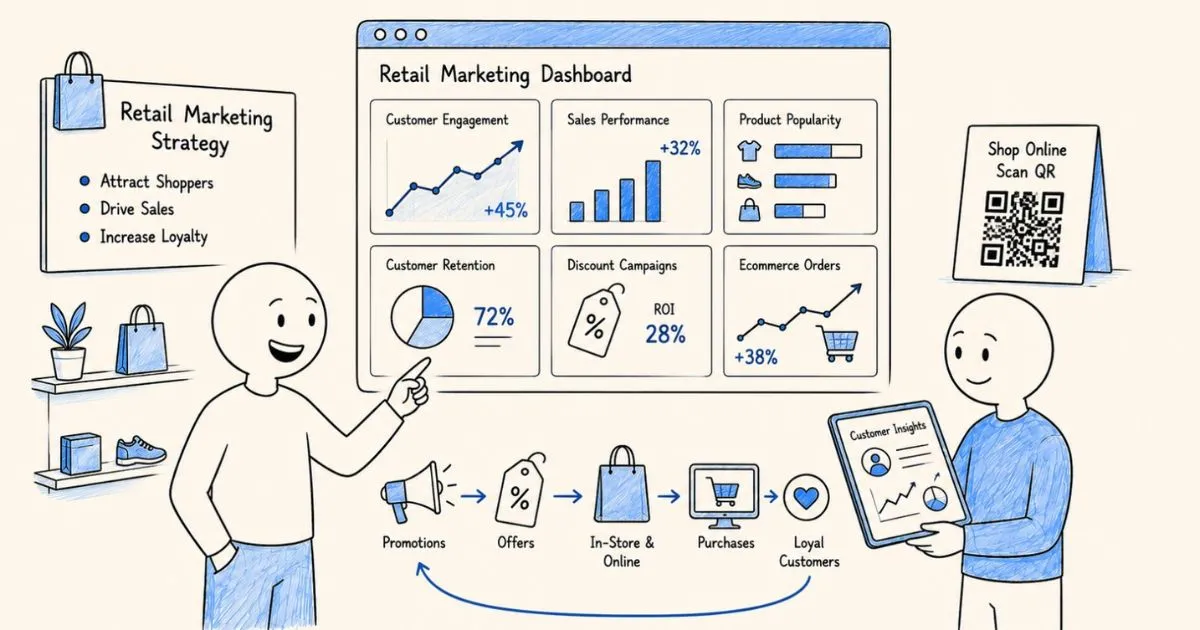
Independent retailers who invest marketing time and budget without understanding what’s actually driving footfall and sales end up spending money on activities that feel productive but don’t move the commercial needle. Ask every new customer how they found you. Track footfall by day and correlate with specific marketing activities. Measure whether social media followers are visiting the shop. Assess whether your email campaigns generate a measurable footfall spike in the days following the send. The marketing activities that generate visits and purchases deserve more investment; those that generate awareness without conversion deserve honest scrutiny. Measurement in retail doesn’t require sophisticated technology — a consistent habit of asking and recording how customers found you provides most of the insight needed to allocate your marketing time and budget far more effectively.