Real estate is one of the most competitive local markets in the world — and the agents and firms that consistently win listings and close deals are those who treat marketing as a professional discipline, not an afterthought. Buyers search online before they call anyone. Sellers choose agents based on perceived authority and local presence. These 35 ideas cover the full spectrum of what works in property marketing, from digital visibility to community presence to the personal brand work that separates a transactional agent from a trusted advisor.
1. Claim and Fully Optimise Your Google Business Profile
A fully optimised Google Business Profile is the fastest way to appear in local search results when someone types “estate agents near me” or “sell my house in [your area].” Complete every field: your office address, phone number, opening hours, service areas, and a keyword-rich description of your specialisms. Upload photos of your office, your team, and sold properties. Post regular updates — new listings, recent sales, market insights. An optimised profile generates a measurable increase in calls and direction requests compared to a neglected one, at zero ongoing cost.
2. Build a Neighbourhood-Specific Landing Page for Every Area You Serve
Generic estate agent websites rank for nothing. Pages targeting specific neighbourhoods — “houses for sale in [suburb],” “flats for sale near [landmark]” — rank for exactly what motivated buyers are searching. Build a dedicated landing page for each area you actively work in, including recent sold prices, market commentary, school information, and transport links. Update these pages quarterly. Agents with area-specific pages consistently outperform competitors for local search visibility and generate enquiries from buyers who are already mentally committed to a specific location.
3. Use Professional Photography on Every Single Listing
Amateur property photos — taken on a smartphone with poor lighting and cluttered rooms — reduce enquiry rates measurably. Professional photography is not a luxury; it’s the difference between a listing that generates viewings in the first forty-eight hours and one that sits on the market. Budget for a professional property photographer on every instruction. The cost — typically £100–£250 per property — is negligible relative to the commission value and to what poor photos cost in extended time on market and reduced sale price.
4. Add Drone Footage and Video Walkthrough to Larger Properties
Video and drone content has become a standard expectation for properties above a certain price point. A two-minute walkthrough video allows buyers to pre-qualify themselves before requesting a viewing, meaning the viewings that do happen are from more motivated buyers. Drone footage is particularly effective for properties with land, coastal views, or distinctive exteriors. Post walkthrough videos to YouTube with full keyword optimisation — they rank in Google search independently and generate organic enquiry from buyers searching for property in your area.
5. Invest in a Personal Brand, Not Just a Firm Brand
In real estate, people instruct agents, not firms. The agent who is visibly present in the local community — who posts market insights, who is named in local press, who attends community events — wins instructions from sellers who feel they already know them. Build your personal brand alongside the firm brand: a professional headshot on every communication, consistent presence on LinkedIn and local social media, a personal bio that tells your story and your area specialisation. The agents with the strongest personal brands command higher fees and spend less on paid acquisition because their reputation does the selling.
6. Post Market Update Content Weekly on Social Media
Homeowners who aren’t currently buying or selling are still watching the market — and the agent who keeps them informed becomes the automatic first call when they decide to move. Post a weekly market update: what sold this week, how many days it was on the market, notable price movements, and your read on local demand. Keep it brief and conversational. These posts generate more engagement than listing promotions and position you as a local expert rather than a salesperson. Over six months of consistent posting, this content builds an audience of warm future clients.
7. Run Facebook and Instagram Ads Targeted to Local Homeowners
Facebook’s advertising platform allows you to target homeowners within a specific postcode area with income and age filters that align with your ideal seller profile. A well-produced video of a recently sold property — with a “thinking of selling? We got £X over asking price in this street” message — converts at rates that generic property advertising cannot match. Run separate campaigns for buyers and sellers. Budget £10–£20 per day per campaign and measure against actual valuation requests. Location-targeted ads from agents who work a defined patch consistently outperform those run by agents trying to cover too wide an area.
8. Send a Quarterly Printed Postcard to Your Farm Area
Physical direct mail is underused by most agents, which means it stands out. A quarterly postcard sent to every home in your core farm area — with recent sold prices on the street, a brief market comment, and your contact details — keeps your name in front of potential sellers who will move eventually. Use real data: “We’ve sold 7 properties in [street name] in the last 12 months at an average of £X” is far more compelling than a generic brand message. Consistency matters more than frequency — four well-designed postcards per year maintain presence better than one expensive campaign.
9. Build an Email List of Past Clients and Warm Contacts
Past clients are your highest-converting future source of instructions and referrals. A quarterly email with genuine local market intelligence — not just a listing newsletter — keeps you front of mind for the three to seven years between an average client’s property moves. Include sold prices from the last quarter, rental yield data for investors, local development updates, and a short personal note. Clients who hear from you regularly with useful information recommend you to friends and family at significantly higher rates than those who receive nothing after completion.
10. Create a Google Ads Campaign for High-Intent Local Searches
Search ads targeting terms like “sell my house in [your town],” “estate agents [your area],” and “how much is my home worth [your postcode]” capture potential clients at the exact moment of decision. Unlike display or social advertising, which reaches people who aren’t actively searching, Google Ads appears when someone is actively looking for an agent. A daily budget of £15–£30 targeting a defined local area with compelling ad copy — focused on your specific local sold history and market knowledge — generates valuation requests at a predictable cost per lead.
11. Host a Free First-Time Buyer Seminar
A free evening seminar for first-time buyers — covering the purchase process, mortgage basics, what to look for in a survey, and what a buying agent does — positions you as the trusted advisor those buyers call when they’re ready. Host it at your office, a local coffee shop, or a community venue. Keep it under ninety minutes and genuinely informative. The attendees who are six to twelve months from buying will remember the agent who helped them understand the process when every agent was just sending them listings. This approach generates long-cycle leads that convert at very high rates.
12. Partner With Local Mortgage Brokers for Mutual Referrals
A mortgage broker sees clients at exactly the point when they’re deciding to buy. A conveyancing solicitor sees clients at the point when they’ve had an offer accepted. A financial adviser often works with clients who are upsizing, downsizing, or buying investment property. These professional relationships — built on genuine reciprocity and mutual client benefit — generate warm referrals from audiences who are already in the market. Identify the three or four professionals in your area who work with your ideal clients, meet them in person, and build a structured referral relationship rather than hoping for occasional introductions.
13. Use a CRM to Follow Up Every Valuation Within 48 Hours
The majority of property instructions go to the agent who follows up best, not the one who presents best at the valuation. Most sellers are appraising three agents. A systematic follow-up sequence — a thank-you note the day after, a market comparison document within 48 hours, a check-in call at day five — demonstrates the professionalism and attentiveness that sellers want from the person managing their largest asset. Agents using a CRM to manage valuation follow-ups consistently convert a higher percentage of valuations to instructions than those relying on memory and manual systems.
14. Publish a Monthly Local Property Market Report
A well-produced monthly market report — covering sales volumes, average prices, days on market, and your personal commentary on local trends — establishes you as the definitive local market authority. Distribute it via email to your contact list, post it on your website (it generates excellent SEO value as original local data), and share it on LinkedIn and local Facebook groups. Journalists covering local property stories will use your reports as a source, generating press coverage. Sellers researching agents before booking valuations will find and read it, arriving pre-qualified on your expertise.
15. Be Active in Local Facebook Groups and Nextdoor
The people in your farm area are already discussing property, local development, and neighbourhood changes in local Facebook groups and on Nextdoor. Being present in those conversations — not with self-promotional posts, but with helpful, informed participation — builds the community goodwill that generates organic recommendations. When someone asks “has anyone sold recently in [street] and can recommend an agent?”, you want to be the name that multiple people suggest without prompting. That kind of recommendation, in a community context, converts to instructions at rates that paid advertising cannot replicate.
16. Showcase Sold Properties With “Result Stories” on Social Media
A sold property post that tells the story — “listed Friday, 14 viewings over the weekend, sold Monday at £20k over asking” — is more compelling content than any generic branding. It demonstrates market expertise, justifies your fee, and creates urgency in the minds of sellers who are watching to see how active the market is. Post a result story for every significant sale, with the seller’s permission. Include the challenge (multiple offers to manage, a complex chain, a property that needed repositioning), the process, and the outcome. These posts generate more enquiry than any other organic social content estate agents produce.
17. Optimise Your Rightmove and Zoopla Listings With Premium Features
The portals remain the primary discovery channel for UK property buyers. Featured listings, premium display, and optimised descriptions — with benefits-led language and all key search filters correctly completed — directly affect how many enquiries each listing generates. Write descriptions that describe the lifestyle of living in the property, not just the number of bedrooms. Use all available photo slots. Include a floor plan on every listing — properties without floor plans receive significantly fewer enquiries than those with one. Portal optimisation is the most immediate lever available for improving listing performance.
18. Build a Referral Programme for Past Clients
A client who sold their home through you and had a good experience is the most credible possible source of new instructions. A formal referral programme — “recommend a friend who instructs us and we’ll donate £200 to your chosen local charity” or a direct incentive — creates an explicit mechanism for turning satisfied clients into active advocates. Reach out to your ten most satisfied clients from the last three years with a personal note and a straightforward request. The cost of acquiring a referred instruction is a fraction of what paid lead generation costs, and referred clients arrive with trust already established.
19. Create a “New to the Area” Guide for Each Neighbourhood You Cover
A downloadable guide to a specific neighbourhood — best coffee shops, school catchment areas, transport links, local events, favourite spots from the agent who knows the area — is genuinely useful content that buyers who are new to the area will search for, share, and remember. Produce one per area you cover, gate it behind an email signup, and promote it on social media and to your contact list. Beyond the lead generation value, these guides establish your local expertise in a way that a standard listing page never can and generate backlinks and social shares from local community accounts.
20. Use LinkedIn to Build Your Professional Network in the Property Industry
LinkedIn is where property developers, landlords, relocation agents, corporate HR departments (who handle employee relocations), and property investors spend professional time. A consistent LinkedIn presence — market commentary, sold results, industry insights, and thoughtful engagement with others’ content — builds a professional network that generates instructions from audiences a standard residential agent rarely reaches. Post two to three times per week on LinkedIn and engage genuinely with others in the property and finance space. The instructions that come via LinkedIn often have larger transaction values and simpler chains than those from portal enquiries.
21. Invest in Signboards With QR Codes
A for-sale board with a QR code that links directly to the full listing — including video, floor plan, and booking link — converts passing interest from neighbours and pedestrians into actual enquiries. The neighbour who sees your board outside a property they’ve walked past for years, scans the QR code out of curiosity, and books a viewing is one of your most motivated buyers. Update the QR code landing page when a sale progresses to reflect the current status. Boards are the most underutilised digital touchpoint in property marketing.
22. Build a YouTube Channel With Local Area Content
A YouTube channel featuring property tours, neighbourhood guides, market updates, and “day in the life” content serves two purposes: it builds a subscriber base of property-interested local people, and it generates long-term organic traffic through YouTube and Google search. A “best streets to buy in [your town]” or “moving to [your area]: everything you need to know” video can accumulate thousands of views from exactly the buyers you want to reach. YouTube content compounds — a video published today continues generating views and enquiries for years without additional cost.
23. Host a Property Investment Evening for Local Landlords
Landlords are among the most valuable clients an estate agent can cultivate — they buy multiple times, have less emotional involvement in the transaction, and refer within investor networks. A quarterly property investment evening — covering rental yields, recent sales data, planning developments, and buy-to-let trends in your area — builds a room full of exactly these clients. Partner with a mortgage broker and an accountant who specialises in property investment. The investors in that room represent multiple future transactions and network referrals that compound over time.
24. Use Testimonials Strategically on Every Marketing Channel
In a market where trust is the primary purchase factor, testimonials from named past clients — specifically addressing the concerns a prospective seller or buyer has before instructing — are among the most persuasive marketing material available. Feature testimonials prominently on your website, in your pitch documents, in your email signature, and in your social media content. The most effective testimonials are specific: not “great service” but “we had a difficult chain that fell through twice and [agent name] kept us informed throughout and found us an alternative buyer within three days.” Specificity creates credibility.
25. Create a Content Series on the Home Buying and Selling Process
Most people buy or sell a property only a handful of times in their lives and find the process confusing and stressful. A content series explaining each stage — preparing your property for market, understanding conveyancing, what happens at exchange, how to handle a chain — generates sustained search traffic from people at every stage of the process and builds brand awareness with an audience who will need an agent soon. Publish it as a series of blog posts, a downloadable guide, and short-form social content. Educational content that reduces buyer and seller anxiety generates more enquiry than promotional content.
26. Develop a Landlord Newsletter With Rental Market Data
A monthly newsletter targeted specifically at landlords — with rental yield data for your area, legislative changes affecting the private rented sector, void period trends, and property investment commentary — keeps you front of mind with every landlord in your database. Landlords who receive genuinely useful information from an agent call that agent first when they want to sell an investment property, expand their portfolio, or switch letting agents. A well-produced landlord newsletter costs relatively little to produce and maintains relationships with clients who have high transaction frequency and value.
27. Get Your Team Active on Local Community Initiatives
An estate agent whose staff are visible at local events — school fundraisers, community clean-up days, charity runs, town festivals — builds genuine community goodwill that translates into instinctive local loyalty. This isn’t about corporate sponsorship; it’s about the agents being recognisable, approachable local faces who clearly care about the area they work in. Sellers frequently instruct local agents over national chains precisely because of this community connection. Invest in your team’s participation in local life and it becomes a brand asset that no advertising budget can replicate.
28. Add a Home Valuation Tool to Your Website
An instant online valuation tool — powered by data from Land Registry, Rightmove, and your own local sold history — captures potential sellers at the moment of curiosity, before they’ve decided to instruct anyone. A homeowner who checks their estimated value on your website has already taken the first step toward selling, and if the tool is useful and the follow-up is prompt and personal, that initial website visit can convert to a formal valuation within days. Embed the tool prominently on your homepage and use it as the call-to-action in your advertising campaigns.
29. Run a “Just Sold” Campaign in the Street Where You Completed
Every completed sale is a marketing opportunity in the immediate vicinity. A leaflet drop to every home in the street — “we just sold [number] [street name] — if you’re thinking of moving, we’d love to show you what buyers are paying in your street right now” — reaches potential sellers at exactly the moment when evidence of market activity is most compelling. Follow up the leaflet with a door-knock canvass a few days later. Agents who run systematic just-sold campaigns in their core patch consistently generate more valuations per completed sale than those who treat each sale as an isolated transaction.
30. Build a Presence at New Housing Developments in Your Area
New housing developments attract buyers who have sold or are selling existing properties — they are among the most motivated movers in your market. Build a relationship with the developers and sales teams at major new builds in your patch. Offer to act as a recommended agent for people selling to buy new. Attend show home events. Be visible to buyers who need to sell their current property before they can complete. New build developments are a concentrated source of instruction-ready sellers who are already committed to moving.
31. Write Guest Columns for Local Publications
A regular column in a local newspaper or lifestyle magazine — “Ask the Agent,” “Property This Month,” or a personal market commentary — builds public credibility and name recognition at a scale that most estate agent marketing doesn’t reach. Local publications are genuinely hungry for expert local contributors who can write with authority about property. Pitch a monthly column to your local paper or magazine with two sample pieces. The column costs you nothing beyond an hour of writing per month and reaches a readership that likely includes hundreds of potential future clients.
32. Offer Free Staging Consultations to Sellers Before They List
A complimentary home staging consultation — delivered by you or a partner interior stylist — helps sellers present their property in its best possible light and builds your relationship with them before the listing goes live. Sellers who receive this service feel that you’re invested in their outcome, not just their fee. It also gives you the opportunity to see the property properly and advise on pricing with full information. Staged properties sell faster and closer to asking price, which strengthens your overall track record and generates the testimonials that win future instructions.
33. Create a “Buyer Waiting List” and Market It to Sellers
A curated list of registered buyers — categorised by property type, budget, and area — is a tangible asset that differentiates you from competitors when pitching to sellers. “We currently have fourteen registered buyers looking for a three-bedroom property in this area, and I’d like to introduce your home to them before it goes onto the portals” is a compelling proposition that off-market sellers particularly respond to. Maintain and actively grow your buyer database, update it regularly, and use it as a specific, evidenced selling point in every valuation presentation.
34. Use Retargeting Ads to Re-Engage Website Visitors
Someone who visited your website and looked at a listing but didn’t enquire has demonstrated interest. Retargeting campaigns — served through Google Display or Facebook — show your ads specifically to those people as they browse the internet, keeping your brand and listings visible during the consideration period. For a property audience that may take weeks or months to make a decision, retargeting is one of the most cost-efficient advertising formats available. A modest retargeting budget of £5–£10 per day keeps you visible to your warmest digital audience continuously.
35. Measure Conversion at Every Stage of Your Funnel
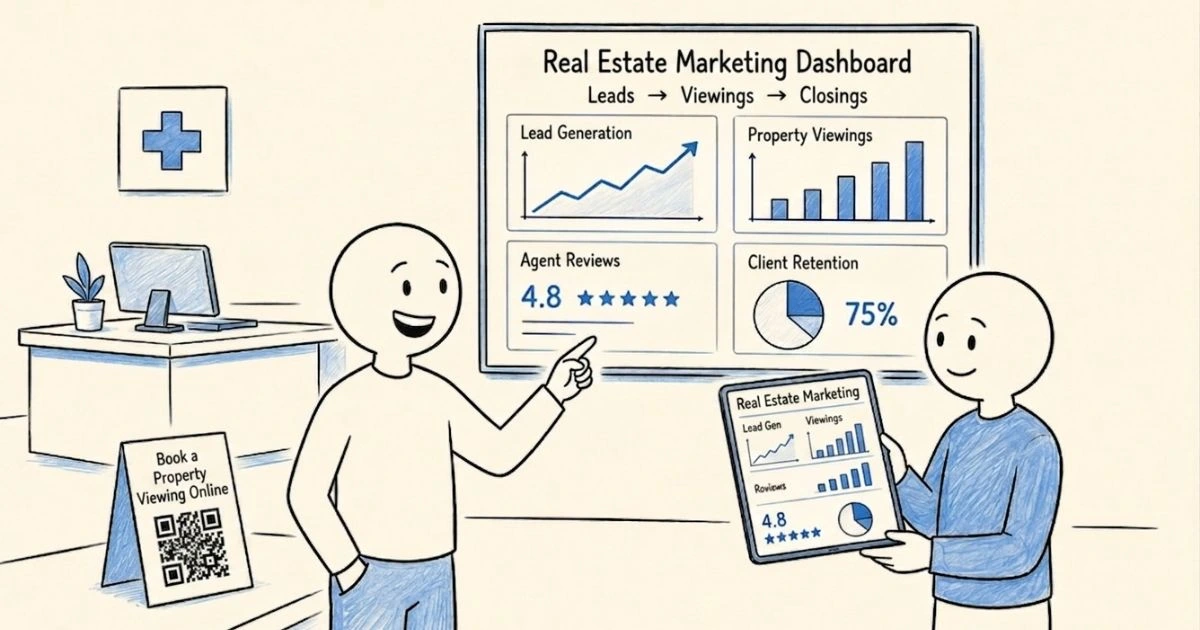
Effective real estate marketing requires understanding which activities generate valuations, which valuations convert to instructions, and which instructions convert to completions — and at what cost. Track where every valuation request originated: was it a portal enquiry, a referral, a social media ad, a just-sold leaflet, or a Google search? Review these metrics monthly. The marketing channels generating instructions at the lowest cost deserve more investment. Those generating enquiries that don’t convert deserve scrutiny or removal. The agents who build the most consistent pipelines are those who measure their marketing as rigorously as they measure their sales performance.