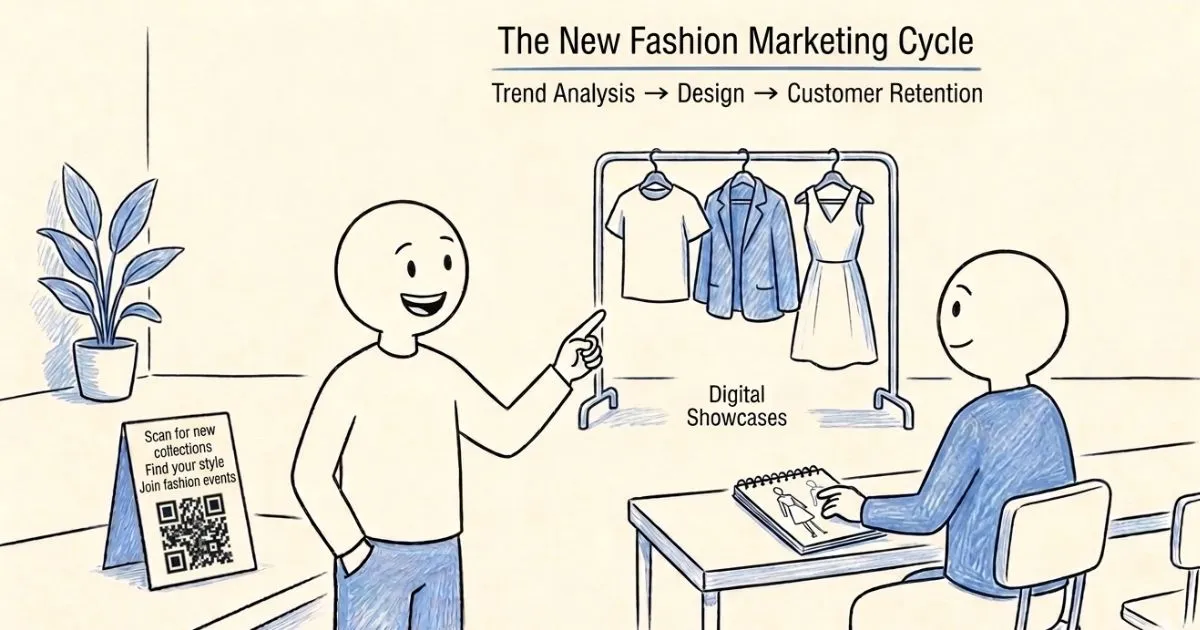
Fashion marketing has always been about desire — creating it, sustaining it, and converting it into purchase. What’s changed is the infrastructure: brands that once needed national distribution and magazine budgets can now build global audiences from a studio the size of a bedroom. Whether you’re an independent designer, a growing streetwear brand, or an established fashion house looking to stay relevant, the principles of effective fashion marketing remain consistent: create visual content that stops the scroll, build community around an aesthetic point of view, and turn customers into advocates. These 23 ideas cover what actually works.
1. Build a Consistent Visual Identity Across Every Channel
In fashion, the aesthetic is the brand. A consistent visual language — a specific colour palette, a shooting style, a typography choice, a model casting philosophy — makes your brand instantly recognisable across Instagram, your website, packaging, and in-store. Inconsistency signals a brand that doesn’t know what it is. Audit every customer touchpoint against a simple brand guideline document: does this look unmistakably like us? The brands that consumers develop genuine loyalty to are those with a clear, consistent visual identity that becomes shorthand for a particular point of view about style and culture.
2. Invest in Short-Form Video as Your Primary Content Format
TikTok and Instagram Reels have made fashion one of the most watched content categories in the world. Outfit reveals, styling tutorials, behind-the-scenes at photoshoots, fabric sourcing stories, and “how it’s made” content collectively generate billions of views per week. The format rewards authenticity and movement — static product photography works on Pinterest and your website, but video is what drives discovery on the platforms where your next customer is spending time. Post five to seven short videos per week minimum. The brands that have built the fastest-growing audiences in fashion over the past three years have done it almost exclusively through consistent short-form video.
3. Work With Micro-Influencers in Your Specific Niche
A fashion influencer with 50,000 engaged followers in your specific niche — sustainable streetwear, modest fashion, workwear for creatives — will outperform a generalist influencer with five million followers for your brand every time. Micro-influencer audiences are built on genuine taste alignment; when they recommend a brand, their followers trust the recommendation as they would a friend’s. Identify ten to fifteen influencers whose aesthetic aligns with your brand, whose engagement rate is genuine (not inflated), and whose audience matches your customer profile. A gifting or fee arrangement with this group generates more qualified traffic and conversion than a single macro-influencer post.
4. Create a Lookbook for Each Collection
A lookbook — a curated visual presentation of a collection in a specific context, shot with intentionality rather than just product on white — serves multiple marketing purposes simultaneously: it tells the editorial story of the collection, it provides social media content, it gives wholesale buyers a presentation tool, and it generates the imagery that powers your website and advertising. Shoot each collection with a clear mood board and art direction brief. A well-produced lookbook is the most versatile marketing asset a fashion brand can produce and the quality of it signals your brand’s ambition and professionalism to every stakeholder who sees it.
5. Build a Community Around Shared Values, Not Just Products
The fashion brands with the highest customer retention are those that have built communities around a shared point of view: sustainability, a subculture, a creative philosophy, or a way of seeing the world. Community members buy repeatedly, refer enthusiastically, and provide the organic content and advocacy that sustain growth without proportionally increasing marketing spend. Build community deliberately: create a private customer group, run events, involve your best customers in product development, and treat them as collaborators rather than buyers. A brand with genuine community doesn’t need to fight for attention — the community brings attention to it.
6. Leverage User-Generated Content From Your Customers
Your customers are photographing and posting their outfits. The marketing opportunity is in capturing, curating, and repurposing that content with permission. Create a branded hashtag, display it at every touchpoint — packaging, tags, receipts, website — and actively monitor it. Reach out to customers whose content you want to repost and feature their photos prominently on your website and social media. Customer photos carry more social proof than brand photography because they show real people choosing to wear your clothes in their real lives. User-generated content programmes also generate ongoing content at minimal cost.
7. Use Pinterest for Long-Term Organic Discovery
Pinterest is underused by most fashion brands despite being one of the highest-intent discovery platforms in the industry. People on Pinterest are in a planning and inspiration mindset — they’re actively looking for style ideas, creating future-purchase boards, and building wishlists. A consistent Pinterest presence — pinning every product, lookbook image, and styling content with keyword-rich descriptions and direct product links — generates organic traffic that compounds over months and years. A pin published today can drive traffic two years from now. Fashion brands that invest in Pinterest consistently report it as one of their highest-converting traffic sources.
8. Collaborate With Other Brands for Limited Edition Collections
Brand collaborations generate excitement, press coverage, and access to each other’s audiences without proportionally increasing marketing spend. The collaboration model works when both brands bring something genuinely distinct to the partnership — a fashion brand and an artist, two brands from different categories whose customers share an aesthetic sensibility, or a designer and a cultural institution. Collaborations create the scarcity and exclusivity that generate organic buzz. Announce them in phases — teaser, reveal, launch — to maximise the content and conversation opportunity each collaboration represents.
9. Host Pop-Up Experiences in Strategic Locations
A well-conceived pop-up — in a curated neighbourhood, at a cultural event, in a partner retailer’s space — generates press coverage, social media content from attendees, and sales from customers who prefer to touch and try before buying. Pop-ups also provide invaluable direct feedback on how customers interact with your product and which pieces generate the most interest. Design the pop-up experience as a brand statement: the space, the styling, the music, and the service should all communicate your aesthetic identity as clearly as your Instagram feed does. A memorable pop-up becomes part of your brand story.
10. Develop a Sustainability Story and Tell It Specifically
Sustainability claims without specifics are dismissed as greenwashing by an increasingly informed fashion consumer. A genuinely specific sustainability story — this fabric comes from this certified supplier, our waste from this collection was reduced by this percentage, our packaging is made from this material — builds the trust that vague environmental language erodes. If your brand has genuine sustainability credentials, communicate them with precision and evidence. If it doesn’t, don’t claim what you can’t substantiate. Consumers who trust a brand’s sustainability claims show significantly higher loyalty and willingness to pay a premium than those who are sceptical.
11. Run a Loyalty Programme That Rewards Style Expression, Not Just Purchases
Standard points-for-purchases loyalty programmes create transactional relationships. Fashion brands that reward customers for style content — posting an outfit, tagging the brand, writing a review, referring a friend, attending an event — build the engaged community that drives the organic growth most valuable to a brand. Design a loyalty programme that reflects your brand values: if your brand is about creative self-expression, reward creative participation. If it’s about sustainability, reward sustainable choices. The loyalty programme that aligns with your brand identity attracts the customers who will become your most valuable advocates.
12. Invest in Professional Product Photography for Your Whole Range
Inconsistent product photography — some pieces shot well, others poorly lit on a mannequin — undermines the brand experience and reduces conversion across your entire range. Invest in a consistent photography approach for every product: consistent background, consistent lighting, consistent model casting, and consistent shot types (front, back, detail, on-model lifestyle). The investment in professional photography pays back immediately in higher conversion rates and in the time saved not reshooting products that were photographed poorly the first time. Strong product photography is infrastructure, not a luxury.
13. Build Your Email List and Use It for Exclusive Access
Email subscribers who opted in to hear from a fashion brand they love are among the most engaged audiences a brand can reach. Use that channel for genuinely exclusive communication: early access to new collections, subscriber-only discounts, behind-the-scenes content, invitations to events. Email that treats subscribers as insiders rather than recipients of broadcast promotions generates higher open rates, higher click rates, and higher purchase frequency than generic newsletter content. A fashion brand with 5,000 genuinely engaged email subscribers has a more valuable marketing asset than one with 50,000 disengaged social followers.
14. Get Your Brand in Editorially Relevant Publications
A feature in the right publication — a style guide in a niche magazine, a “brand to watch” piece in a relevant blog, a product placement in a visual editorial — reaches exactly the audience your brand is designed for, with the editorial credibility that advertising cannot buy. Build relationships with fashion journalists and stylists by genuinely engaging with their work, offering product loans for shoots without strings attached, and pitching stories that are genuinely interesting rather than promotional. Earned editorial coverage in the right publications generates brand awareness and direct traffic at a quality that paid placements rarely match.
15. Create a Size-Inclusive Range and Market It Authentically
Size inclusivity is a genuine market opportunity in a sector that has historically underserved most body types. Brands that offer a genuinely inclusive size range — not as an afterthought but as a core part of the product offer — access a customer segment with significant purchasing power and strong loyalty to brands that serve them well. The marketing of size inclusivity matters as much as the product range: campaign imagery that features genuinely diverse models, copy that addresses fit across the size range, and community engagement that makes all customers feel represented. Authenticity in this area is rewarded with loyalty; tokenism is punished with public criticism.
16. Use Paid Social Advertising With Custom Audiences
Fashion is one of the strongest-performing categories for paid social advertising because the visual nature of the product and the emotional nature of style decisions align well with the formats available on Instagram and TikTok. Custom audiences built from your existing customer list, lookalike audiences modelled on your best customers, and retargeting audiences built from website visitors all offer more precise targeting than broad demographic campaigns. Test multiple creative formats — carousel, Reels, single image — against multiple audience segments and optimise toward add-to-cart or purchase, not just reach. Paid social works in fashion when the creative is strong and the targeting is precise.
17. Develop a Wholesale and Stockist Strategy That Builds Credibility
The right wholesale partnership — with a boutique, department store, or concept store whose curation aligns with your brand — builds credibility with consumers who discover you through a trusted retailer. Wholesale distribution is also a marketing channel: a display in an aligned boutique reaches customers who would never have found you online. Choose stockists whose aesthetic and customer base genuinely complement your brand rather than pursuing volume distribution that dilutes your positioning. A fashion brand stocked in twenty perfectly aligned boutiques is better positioned than one available everywhere but associated with nothing specific.
18. Build Pre-Launch Waitlists for New Drops
Creating anticipation before a collection launches is one of the most effective demand generation techniques in fashion. A waitlist that prospective customers can join before a collection is available signals exclusivity, builds a committed buyer list before launch day, and provides the social proof that something worth waiting for is coming. Market the waitlist itself as the content: teasers, countdown content, behind-the-scenes of the collection being made. Waitlisted customers convert to purchase at significantly higher rates than cold audiences on launch day, and the waitlist itself becomes a marketing story when media covers the demand.
19. Partner With Stylists and Costume Designers for Organic Placement
Stylists who dress editorial shoots, musicians, actors, and public figures are powerful gatekeepers to organic placement that money alone cannot always buy. Building genuine relationships with stylists — by being responsive, making the product experience excellent, and offering flexibility rather than rigid PR structures — generates placement opportunities that reach large audiences with the credibility of a genuine style choice rather than a paid advertisement. A well-placed garment in a music video or on an influential figure’s social media generates more brand awareness than equivalent paid media spend in most fashion categories.
20. Run Seasonal Sales Events as Marketing Moments
End-of-season sales, Black Friday events, and anniversary promotions are not just revenue events — they’re marketing moments that attract new customers who were aware of the brand but waiting for the right moment to buy. Design sale events with intentionality: a clear story, a time limit that creates genuine urgency, and a customer experience that converts first-time buyers into regulars. Capture email addresses from every sale customer and move them into a post-purchase nurture sequence. A new customer acquired during a sale event at a reduced margin who buys twice more at full price in the following year is highly profitable.
21. Create a Strong Brand Archive and Heritage Narrative
For brands with history, the archive is a marketing asset. Archival imagery, original design sketches, founder stories, and the evolution of signature pieces tell a depth-of-brand story that gives consumers a richer reason for loyalty than product alone. A brand that knows where it comes from and communicates that with pride attracts customers who value authenticity and craftsmanship over novelty. Create content around your heritage: reissue archival pieces with modern updates, document the provenance of signature design decisions, and tell the founder story in the brand’s own words rather than leaving it to others.
22. Use Styling Content to Increase Average Order Value
Styling content — “how to wear this three ways,” outfit builders on your website, “shop the look” features that show full outfits — increases average order value by showing customers how individual pieces work together. A customer who arrives to buy a jacket and sees it styled with a shirt, trousers, and boots they also want is more likely to buy multiple pieces than one who sees the jacket in isolation. Build styling content into your product pages, your social media, and your email campaigns. Brands that invest in styling content consistently report higher average order values and higher customer satisfaction.
23. Measure Full-Funnel Marketing Performance, Not Just Sales
Fashion marketing works across a long consideration cycle — a customer might discover a brand on Instagram, visit the website three times over four weeks, sign up for the email list, and buy from the third email. Attribution that credits only the last touchpoint before purchase systematically undervalues the awareness and consideration work that made the purchase possible. Use multi-touch attribution or, at minimum, ask new customers how they first heard about you. Understanding which channels drive initial awareness versus which ones drive conversion allows you to invest intelligently across the full funnel rather than cutting channels that don’t show direct last-click attribution.