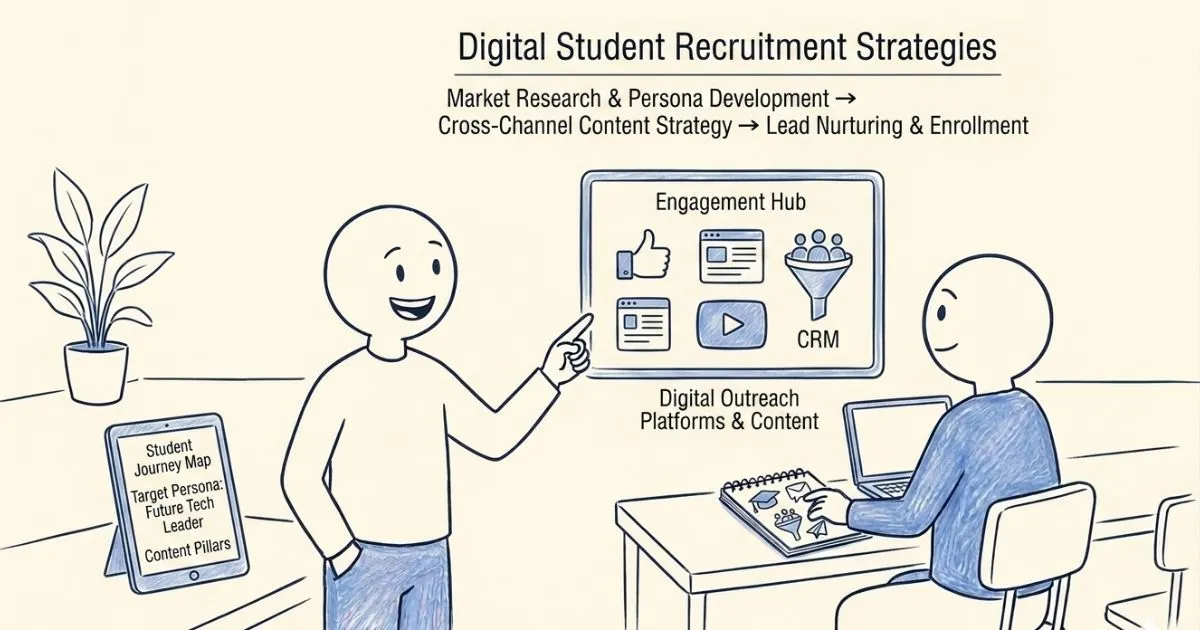
Education marketing sits at an unusual intersection: the “product” shapes lives, the decision-maker is often a parent or employer rather than the learner, and the sales cycle can span months or years. Whether you’re marketing a primary school to local families, a university to international applicants, a vocational college to school leavers, or a corporate training provider to HR departments, the fundamentals are the same — build trust, demonstrate outcomes, and be present where your audience is making decisions. These 31 ideas are practical across institution types and budget levels.
1. Optimise Your Google Business Profile for Local Discovery
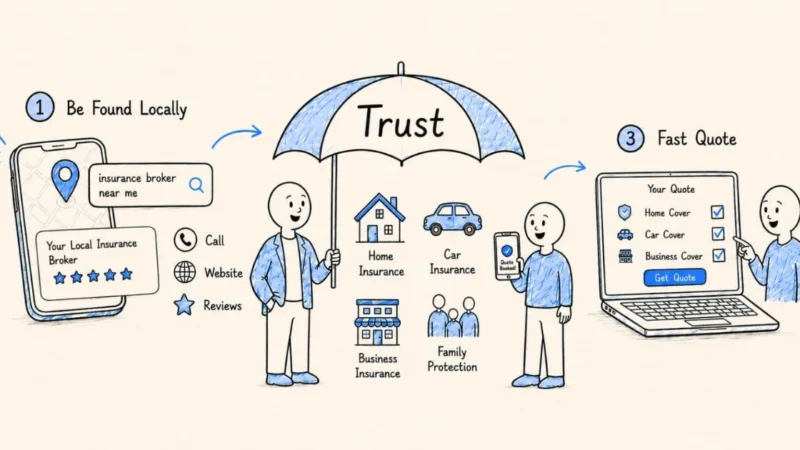
For schools and colleges with a physical presence, a complete Google Business Profile ensures you appear when parents and prospective students search for educational options nearby. Fill in your address, phone number, opening hours, programme overview, and a description rich with the specific courses and qualifications you offer. Upload photos of facilities, classrooms, events, and student life. Post updates about open days, results, and news. An optimised profile generates significantly more direct enquiries from local searches than a neglected one, with no ongoing cost beyond the time to maintain it.
2. Build Dedicated Landing Pages for Each Programme or Course
A single “courses” page on your website ranks for nothing specific. Individual landing pages for each programme — each one optimised for the specific search terms a prospective student or parent would use — capture motivated traffic at the exact moment of research. A page titled “Level 3 Digital Marketing Apprenticeship — [Your City]” with clear curriculum details, entry requirements, career outcomes, and student testimonials will rank for those exact terms and convert visitors at significantly higher rates than a generic course listing. Build one page per programme and maintain it carefully.
3. Showcase Graduate Outcomes and Career Destinations
The question every prospective student is really asking is: “Will this qualification get me where I want to go?” Graduate destination data — percentages in employment or further study, named employers who hire your alumni, salary benchmarks, and specific career stories — is the most persuasive content an educational institution can produce. Build this into every programme page, every open day presentation, and every admissions piece. Schools and colleges that lead with outcomes rather than facilities or heritage consistently outperform those that don’t in both enquiry volume and conversion to enrolment.
4. Use Video Testimonials From Current Students and Alumni
A one-minute video of a current student explaining why they chose your institution and what their experience has been — shot on a smartphone in natural light — carries more credibility than any amount of prospectus copy. Alumni stories showing the career journey after graduation are even more powerful. These videos need not be polished productions; authenticity converts better than professionalism in this context. Use them on your website, in social media, in paid advertising, and at open day presentations. A library of ten genuine student and alumni video testimonials is one of the most effective marketing assets an institution can hold.
5. Run Open Days as Marketing Events, Not Just Information Sessions
Open days are the highest-conversion touchpoint in the admissions funnel — the moment a prospective student goes from researching to deciding. Design the open day experience deliberately: ensure current students are present and briefed to engage authentically, create opportunities for hands-on experience in facilities, make it easy to ask questions of staff in a genuine rather than transactional way, and follow up within 24 hours with personalised information based on what each visitor asked about. Institutions that treat open days as experience design rather than administration events convert significantly higher proportions of attendees to applications.
6. Start a Blog With Careers and Industry Advice Content
A blog that publishes genuinely useful careers and industry advice — “how to become a [career your graduates pursue],” “what employers in [sector] look for in graduates,” “the skills gap in [industry] and how to fill it” — generates sustained organic search traffic from exactly the audience considering your programmes. This content serves prospective students doing career research, parents helping their children plan, and employers looking to understand the graduate talent pipeline. Each well-optimised article is a permanent traffic source that compounds in value over time without additional investment.
7. Be Present at Schools and Career Fairs
School career fairs, UCAS events, and apprenticeship expos put your institution in front of prospective students at exactly the point when they’re actively choosing their next step. The institutions that perform best at these events bring current students or recent alumni to speak — not just recruitment staff — and focus on genuine conversation rather than brochure distribution. Follow up every conversation with a personalised email within 24 hours. Collect contact details for every attendee who shows interest and enter them into a structured nurture sequence that sustains the conversation until they’re ready to apply.
8. Invest in Local and Regional Press Relations
Results days, notable alumni achievements, innovative new programmes, employer partnerships, and community initiatives all represent genuine news hooks for local and regional press. A single article in a regional newspaper or education trade publication reaches an audience of parents, school counsellors, and employers that targeted digital advertising rarely touches. Build relationships with local education journalists, prepare a press list, and develop a simple media relations practice — a press release for each significant news event, followed by a personal call to relevant journalists. Earned media credibility compounds in ways that paid advertising cannot.
9. Develop an Employer Partnership Programme
Employers who partner with your institution — offering work placements, sponsoring courses, providing guest lecturers, or recruiting your graduates — become co-marketers for your programmes. A named employer partnership with a well-known local or national employer dramatically increases programme credibility and conversion rates from prospective students. Build a formal employer engagement programme with a dedicated contact and a structured menu of partnership options. Market these partnerships prominently on course pages and in admissions materials. Employers benefit from early access to talent; you benefit from credibility and differentiation.
10. Use Paid Search Ads Targeting Enrolment-Intent Keywords
Prospective students use very specific search queries when they’re close to applying — “[course name] near me,” “[qualification] online,” “best [subject] course in [city].” Google Ads targeting these high-intent terms captures applicants at the moment of decision. Unlike awareness-stage content, these searches indicate readiness to act. A modest daily budget of £20–£50 targeted precisely to your geographic area and specific programme terms, with ad copy focused on outcomes and a direct application CTA, generates applications at a measurable and predictable cost per enrolment.
11. Build a Social Media Presence That Reflects Student Life, Not Just Achievements
Prospective students use Instagram and TikTok to get a genuine feel for student culture — the informal, everyday experience — not just official results and facilities. A social media presence that shows the reality of life at your institution: a day in the lab, the cafeteria at lunchtime, staff who are genuinely engaging, students celebrating small wins as well as big ones — is more persuasive than a curated highlight reel of awards and rankings. Give students the opportunity to take over the account for a day. Authentic institutional social media content generates significantly higher engagement than polished broadcast content.
12. Create an Alumni Network and Leverage It Actively
A well-maintained alumni network is a genuine marketing asset: former students who had a good experience will refer prospective students, speak at open days, provide work placements, and generate the employer partnerships that make your programmes more attractive. Build a basic alumni database, send a quarterly update with news from the institution, and actively ask alumni to participate in recruitment events. The institutions with the strongest reputations in any sector are almost always those with the most engaged alumni communities — because alumni advocacy is the most credible endorsement an educational institution can receive.
13. Publish Clear, Comparative Fee Information
Fee transparency is a competitive advantage in a market where many institutions bury or obscure the cost of study. Prospective students who find clear, honest fee information — including what’s included, what funding is available, and how the cost compares to similar institutions — trust the institution more and convert at higher rates than those who have to request fee information. Build a dedicated fees and funding page with genuine comparisons, scholarship information, and financial support contacts. Institutions that are honest about cost attract students who are committed rather than those who drop out when fees become clear.
14. Use Email Nurture Sequences for Every Enquiry
A prospective student who enquires about a course is at the start of a decision process that may take weeks or months. A structured email nurture sequence — triggered automatically when someone submits an enquiry form — keeps your institution present throughout that consideration period with relevant information: programme details, student stories, open day invitations, application deadlines, and available funding. Institutions that follow up enquiries with a personalised, multi-touch email sequence consistently convert a higher proportion to applications than those that send a single information pack and wait.
15. Run Taster Days and Trial Lessons for Prospective Students
An invitation to experience a real class, a workshop, or a day in your facilities removes the uncertainty that prevents many prospective students from committing to an application. Taster sessions — whether in-person or virtual — work particularly well for vocational and professional programmes where the hands-on experience is central to the appeal. Participants who attend a taster day convert to applications at dramatically higher rates than those who only read a prospectus. Promote taster days prominently in your advertising, on your website, and in your follow-up communications with enquiries.
16. Develop a Referral Programme for Current Students
Current students who refer friends to your institution are your most credible recruiters — and a formal referral programme with a meaningful incentive (fee discount, bursary contribution, or a voucher) creates an explicit mechanism for this. Students refer people who share their interests and aspirations, making referred applicants more likely to complete their programme. Track referrals via a unique code or by asking “how did you hear about us?” at application stage. The cost of acquisition via referral is almost always lower than through paid channels, and referred students have higher retention rates.
17. Get Listed in Every Relevant Course Directory
Beyond your own website and Google, prospective students use UCAS, course directories, professional body websites, and apprenticeship finders to research options. Each of these is a separate discovery channel with its own audience. Audit your listings on every relevant directory annually: ensure course information is current, entry requirements are accurate, and your institution’s description is compelling and keyword-rich. Missing or outdated listings cost applications from prospective students who would otherwise have contacted you. The maintenance cost is minimal relative to the value of each additional application it generates.
18. Create Content Around the Most Common Questions Applicants Ask
Your admissions team hears the same questions repeatedly. Turning those questions into detailed, well-optimised content pages — “what GCSE grades do I need for a Level 3 course?”, “can I study part-time while working?”, “what support is available for students with learning differences?” — captures the search traffic from prospective students asking those same questions on Google. These pages rank for long-tail search terms with high commercial intent and pre-answer the objections that prevent some prospective students from enquiring. Each answered question is a potential conversion point from researcher to applicant.
19. Partner With Feeder Schools and Colleges
Secondary schools, sixth-form colleges, and other institutions whose students are potential applicants to your programmes are natural referral partners. Build relationships with school careers advisors and heads of sixth form through regular visits, up-to-date information packs, and genuine responsiveness when they have questions on behalf of their students. Institutions that are well-regarded by careers advisors receive warm referrals continuously and at no cost. Be the institution that careers advisors call when a student’s interest aligns with your programmes, and that relationship compound over years into a consistent application pipeline.
20. Build a Scholarship or Bursary With Its Own PR Campaign
A named scholarship — even a modest one — generates press coverage, distinguishes your institution from competitors, creates a positive annual news hook when the recipient is announced, and signals to applicants from all backgrounds that you’re genuinely invested in access. Structure the scholarship with a good story: a named benefactor, a clear eligibility criterion tied to your values, and a public announcement of the recipient each year. The PR value of a well-publicised scholarship consistently exceeds its monetary cost and reaches audiences that standard admissions marketing doesn’t.
21. Use LinkedIn to Reach Adult Learners and Professional Development Audiences
Adult learners, career changers, and professionals seeking qualifications or upskilling spend time on LinkedIn in a frame of mind conducive to educational investment. LinkedIn advertising allows you to target by job title, industry, seniority, and location — meaning a sponsored content campaign for a professional development programme can reach exactly the right audience. Organic content — case studies of professionals who progressed through your courses, employer endorsements, and industry insight posts — builds brand awareness with this audience over time without paid spend. LinkedIn is the primary digital channel for professional and higher education marketing.
22. Run a Student Success Story Series on Your Website and Social Media
A weekly or monthly “student success story” — profiling a current student or recent graduate with their own voice, their background, why they chose your institution, and what they’re aiming for — creates a library of authentic, relatable content that prospective students identify with far more strongly than institutional voice copy. These stories work best when they feature students who reflect the diversity of your intake, including those who arrived without conventional qualifications or through non-traditional routes. Success stories that address real barriers to entry convert sceptical prospects who’ve been told educational progression isn’t for them.
23. Develop a CPD Offer for Local Employers
Continuing Professional Development contracts with local employers bring revenue, industry relationships, and a pipeline of mature students whose employer pays their fees. The employer relationship that starts with a CPD contract often leads to apprenticeship partnerships, work placement agreements, and graduate recruitment pipelines. Market CPD directly to HR departments and L&D leads at companies in your catchment area with a tailored offer based on the skills gaps those industries face. B2B education marketing is a distinct discipline from consumer marketing — it requires account-based targeting, professional case studies, and longer sales cycles.
24. Make Your Website Fast, Mobile-Optimised, and Accessible
The majority of prospective students research educational options on mobile devices, often on relatively slow connections. A website that loads slowly, is difficult to navigate on a phone, or fails accessibility standards loses prospective applicants before they read a word of your content. Audit your website for Core Web Vitals performance, mobile usability, and WCAG accessibility compliance. Institutions with fast, accessible, mobile-optimised websites rank higher in Google and convert more visitors to enquiries. This is infrastructure, not marketing — but it underpins the effectiveness of every other channel.
25. Create a Virtual Tour of Your Facilities
A 360-degree virtual tour of your campus, classrooms, labs, studios, or facilities allows prospective students who can’t visit in person — international applicants, those with mobility limitations, or those who are researching at an early stage — to experience your physical environment. Virtual tours increase the quality of open day attendees by filtering for those who’ve already seen the facilities and remain interested. Embed the tour prominently on your website and link to it in admissions correspondence. The cost of a professional virtual tour has dropped significantly and the return on engagement is substantial.
26. Use Retargeting Ads to Re-Engage Website Visitors During Clearing
Prospective students who visited your website but didn’t enquire are warm leads who need a reason to come back. Retargeting campaigns — on Google Display, Facebook, and Instagram — keep your institution visible to these people during the key decision periods: results day, Clearing, January applications round, and any rolling admissions periods. A retargeting message focused on a specific programme, a compelling outcome statistic, or a scholarship deadline creates urgency for an audience that’s already shown interest. For institutions with rolling intake, retargeting should run continuously with refreshed creative.
27. Attend and Speak at Industry Conferences in Your Sector
For professional training providers and institutions with vocational programmes, speaking at industry conferences and trade events builds credibility with the employers and professionals who influence enrolment decisions. A presentation on skills gaps in your sector, the future of professional education, or the outcomes your graduates achieve positions your institution as a thought leader rather than just a course provider. Conference networking generates employer partnerships, guest lecturer relationships, and the kind of industry-connected curriculum that makes programmes more attractive to prospective students.
28. Build a Newsletter for Prospective Students in the Consideration Phase
A monthly email newsletter for prospective students who’ve expressed interest but not yet applied — containing student stories, industry news, programme updates, scholarship announcements, and key dates — maintains engagement during the long consideration phase that many educational decisions involve. The newsletter that delivers genuine value throughout a six-to-twelve-month research and decision period builds a relationship that converts at significantly higher rates than cold outreach at application deadline time. Segment your list by programme interest so that content remains relevant rather than generic.
29. Monitor and Respond to Reviews on Google, Trustpilot, and Uni Compare
Prospective students and their parents read reviews before making application decisions. Your presence on Google Reviews, Trustpilot, and sector-specific platforms like Uni Compare or Hotcourses is a live marketing channel that you either manage proactively or cede to chance. Build a systematic process for asking current students to leave reviews at the point of highest satisfaction — post-induction, after a positive assessment result, or at graduation. Respond to every review, positive and negative, professionally and promptly. Review volume and recency are ranking factors on these platforms and trust signals to prospective applicants.
30. Create Dedicated Marketing for International Students
International students require distinct marketing from domestic audiences: different discovery channels (education agents, country-specific platforms, international university fairs), different content (visa information, accommodation guidance, cultural integration support), and different trust signals (rankings, accreditations recognised in their home country, named alumni from their country). If international recruitment is part of your growth strategy, treat it as a distinct marketing programme with dedicated budget, a specific landing page for each key country, and relationships with education agents in your priority markets. International marketing that tries to use domestic assets typically underperforms.
31. Measure Enquiry-to-Enrolment Conversion Rates by Channel
Understanding which marketing channels generate not just enquiries but actual enrolments is the most important analytical task in education marketing. An open day that generates fifty enquiries but only two enrolments is less valuable than a referral programme that generates ten enquiries and eight enrolments. Track the source of every enrolment — at application and again at enrolment — and calculate the cost per enrolled student by channel. Allocate budget toward the channels with the best conversion rates, not the highest enquiry volumes. Institutions that optimise for enrolment rather than enquiry consistently achieve more sustainable and cost-effective student recruitment.