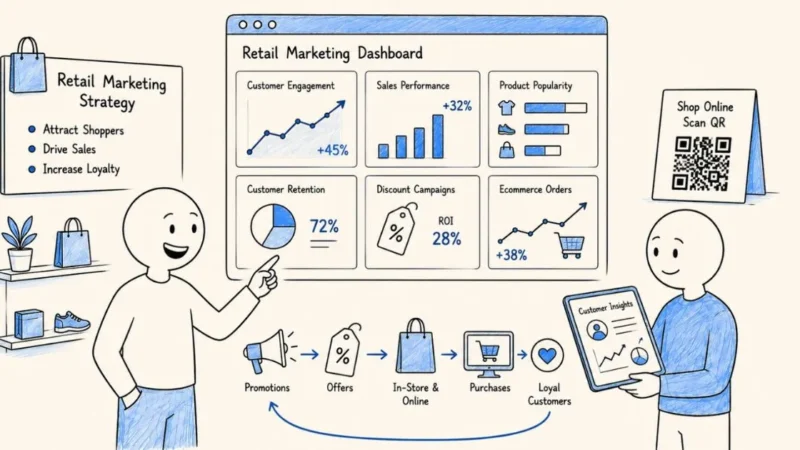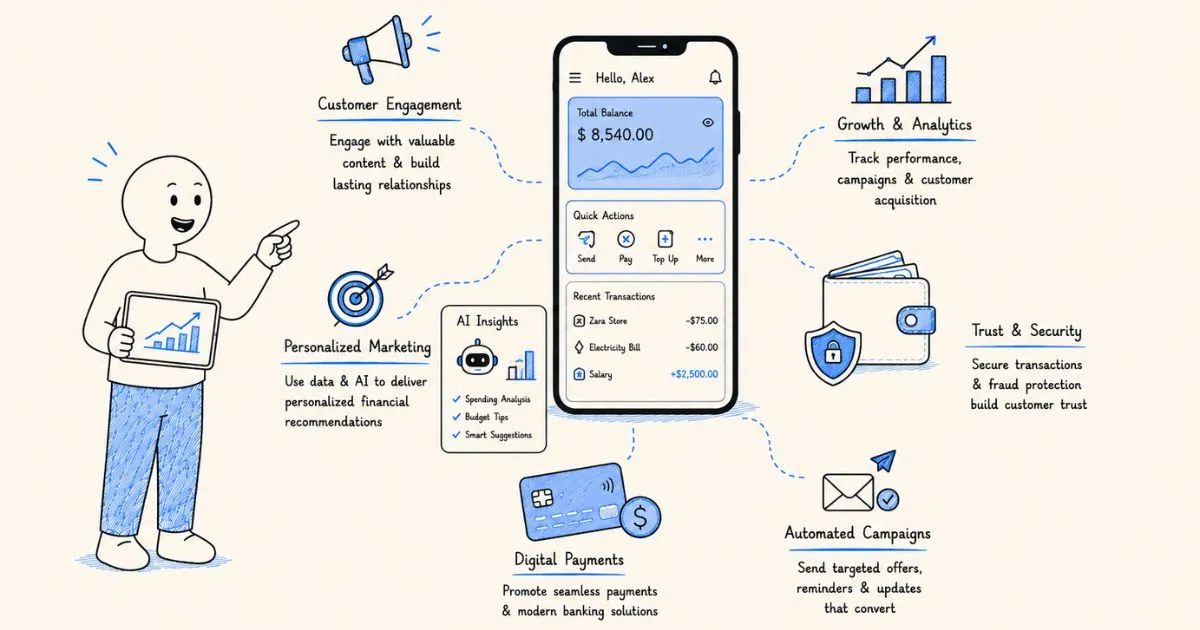
Marketing a fintech product is uniquely demanding. You’re asking people to trust you with their money, their data, or both — and you’re doing it in a category where the incumbent banks have decades of brand recognition and regulatory credibility. What fintech brands have in their favour is the ability to move faster, communicate more honestly, and build products that actually solve the frustrations users have with traditional finance. The marketing strategies that work in fintech are those built on that foundation: trust, transparency, genuine product utility, and a customer experience that turns users into advocates. These 29 ideas cover what moves the needle.
1. Lead With Transparency as a Core Marketing Principle
Financial services have a long history of burying fees, obfuscating terms, and making it difficult to understand the true cost of a product. Fintech brands that publicly commit to transparency — clear fee structures, plain-language terms, no hidden charges — differentiate themselves from both incumbents and other fintechs in the most compelling way possible: by actually being different in a way that matters. Make your pricing page the clearest in your category. Explain every fee in plain language. Show the comparison to the alternative. Transparency marketing works when it’s backed by a genuinely transparent product — and when it is, it generates the kind of word-of-mouth that no advertising can replicate.
2. Build Credibility Through FCA Registration and Regulatory Communication
Regulatory credibility is the primary trust barrier in fintech. Prominently communicating your regulatory status — FCA registration, FSCS protection, PSD2 compliance — addresses the first doubt that prospective customers have about any financial product. Display regulatory credentials clearly on your homepage, in your onboarding flow, and in your advertising. Go beyond the minimum: explain what each regulation means in plain terms and what protection it gives your customers. Financial brands that help consumers understand their regulatory protections build trust faster than those that treat compliance as small print rather than a selling point.
3. Create Educational Content Around the Financial Problems You Solve
Prospective customers who find your content while researching a financial problem — “how to transfer money internationally cheaply,” “how to build business credit from scratch,” “what is open banking?” — arrive at your product already understanding why they need it. Educational content that genuinely answers these questions, without over-promoting your product, builds organic search traffic from audiences with high commercial intent. Produce one well-researched, genuinely useful article per week. Over twelve months, a content library of fifty high-quality financial education articles generates more sustained inbound traffic than most fintech brands’ paid acquisition budgets.
4. Use Comparison Content to Win the Research Phase
Users researching fintech products compare options extensively before deciding. “Us vs. [competitor]” pages, product comparison tables, and “[category] alternatives” content put you in the conversation at the exact point of decision. Write these pages honestly — acknowledge where competitors do something better, and explain specifically where your product is superior. Honest comparison content converts better than promotional comparison content because it demonstrates confidence in the product and respects the reader’s intelligence. These pages also rank well for high-intent comparison searches that indicate a buyer very close to making a decision.
5. Build a Referral Programme With a Meaningful Incentive
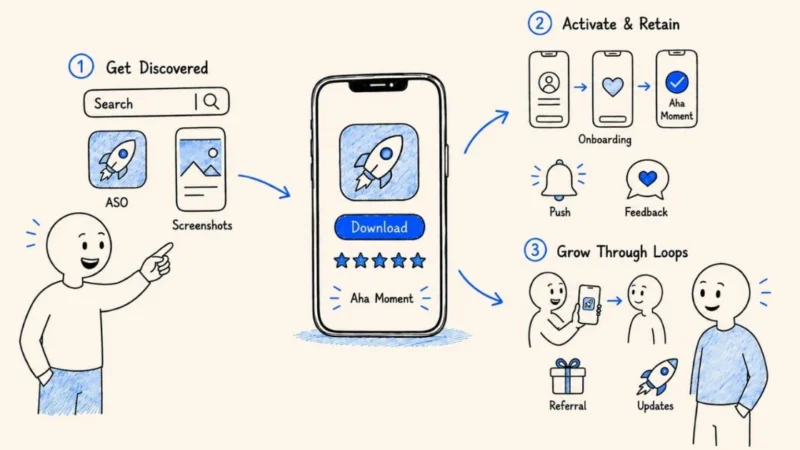
Referral programmes have generated some of the most efficient growth in fintech history — Monzo, Revolut, and Wise all built significant early user bases through referral mechanics. A genuinely valuable incentive — cash credit, fee waiver, enhanced rate — creates a specific reason for satisfied users to introduce your product to their network. Keep the mechanics simple: one link, immediate reward, transparent tracking. The best fintech referral programmes are those where the referrer is genuinely proud to recommend the product and the incentive is merely the mechanism that makes the recommendation feel active. Track referral conversion quality as well as volume — referred users who arrive with genuine interest retain at higher rates.
6. Invest in App Store Optimisation
For fintech products delivered through a mobile app, the App Store and Google Play are discovery channels that most brands significantly underinvest in. App Store Optimisation — a keyword-rich app title and description, regular screenshot updates, a proactive review generation strategy, and A/B testing of store listing elements — meaningfully increases organic downloads from users searching for financial apps. A one-point improvement in your App Store rating can double your conversion rate from store visitors to downloads. Treat ASO with the same rigour you’d apply to website SEO — it’s the same discipline applied to a different search environment.
7. Get Featured in Fintech and Personal Finance Media
Fintech Insider, AltFi, PYMNTS, This is Money, Moneywise, and dozens of personal finance publications and newsletters cover new products and services actively. A well-written product announcement, a data story from your user base, a founder interview, or a commentary piece on a regulatory development that affects your customers can generate coverage that reaches exactly your target audience. Build a media list of the ten to fifteen publications and writers who cover your specific category and build genuine relationships with them over time. Earned media in fintech category publications generates trial and trust simultaneously.
8. Partner With Financial Influencers and Money Content Creators
Financial content on YouTube, TikTok, and Instagram — covering budgeting, investing, savings, side income, and financial independence — attracts enormous audiences of people actively improving their financial position. These audiences are exactly the people most likely to try a new financial product recommended by a creator they trust. Identify creators whose audience demographics and financial content focus align with your product, and build genuine partnership relationships rather than one-off sponsored posts. The best fintech partnerships with finance creators generate sustained product mentions across multiple pieces of content, not just a single paid placement.
9. Use LinkedIn for B2B Fintech Marketing and Thought Leadership
For fintech products targeting businesses — payment solutions, expense management, lending, payroll — LinkedIn is the primary digital marketing channel. Decision-makers in finance, operations, and HR are active on LinkedIn and respond to content that addresses genuine business problems with specific, evidence-based solutions. Build a company page with consistent posting of industry insights, product updates, and case studies. Invest in the personal LinkedIn presence of your founders and senior leadership — thought leadership content from named individuals consistently outperforms brand content in reach and engagement on the platform.
10. Build Trust With Social Proof at Every Touchpoint
In financial services, social proof performs a specific trust function that advertising cannot. The number of customers on your platform, Trustpilot rating, App Store rating, reviews from named users, and media logos all signal to a sceptical prospect that others have taken the risk and been rewarded. Display social proof deliberately throughout your marketing and product: on your homepage, in your advertising, on your app store listing, in your onboarding flow, and in your sales materials. Fintech brands that systematically build and display social proof reduce the hesitation that prevents prospective customers from trying a new financial product.
11. Run Webinars and Events Around Financial Education Topics
A free webinar on a genuinely useful financial topic — managing cash flow as a freelancer, how to optimise your company’s international payments, building a savings habit on a variable income — attracts an audience that is self-selecting for the exact financial problem your product solves. Webinars build personal connection with founders and team members in a way that other content formats don’t, and the follow-up sequence from a webinar registration is one of the highest-converting sales processes available. Run one webinar per month, record it for subsequent on-demand distribution, and build a dedicated webinar content library over time.
12. Showcase Security and Data Protection Visibly
Security anxiety is one of the primary barriers to fintech adoption, particularly among users who’ve never used a non-bank financial product. Communicating your security infrastructure in plain language — encryption standards, two-factor authentication, biometric login, fraud monitoring, and what happens if something goes wrong — addresses the barrier directly. A dedicated security page, security messaging in your onboarding flow, and proactive communication about security updates all signal that your product takes user protection as seriously as the established banks. Users who feel confident in your security are significantly more likely to add funds and engage with the product beyond initial trial.
13. Offer a Free Tier or Free Trial That Genuinely Demonstrates Value
In fintech, the best marketing is often the product itself. A free tier or trial period that allows users to experience the core value of your product — without credit card details or a commitment — removes the primary barrier to trial for risk-averse financial consumers. Design the free tier to include exactly the features that make your product’s value unmistakable, and build the upgrade path around features that power users naturally want as they engage more. The conversion from free to paid in fintech is driven by users experiencing genuine value, not by artificial feature limitations that frustrate the trial experience.
14. Build an Affiliate Programme Targeting Personal Finance Blogs
Personal finance bloggers and content sites — those covering savings, investing, budgeting, and financial independence — are highly credible product recommenders to audiences that are actively looking for better financial tools. An affiliate programme with fair commission structures and genuine product quality turns these publishers into a performance-based marketing channel that costs nothing until it converts. Provide affiliates with honest product information, clear comparison data, and high-quality creative assets. The affiliate relationships that generate the best long-term results are those where the product is genuinely recommended rather than merely placed for commission.
15. Localise Marketing for Every Market You Operate In
Financial products are deeply culturally and regulatorily specific. A product that works in the UK requires genuinely different marketing in Germany, France, or India — not just translation but cultural adaptation, regulatory communication relevant to each jurisdiction, payment context that matches local behaviour, and trust signals that resonate with local financial culture. Fintech brands that treat international expansion as a translation exercise consistently underperform against those that build genuinely localised marketing for each market. This requires local team members, local media relationships, and local regulatory understanding in the marketing function.
16. Use Data From Your Platform to Create Original Research
Fintech companies sit on some of the most interesting behavioural data in the economy — payment trends, spending patterns, savings behaviour, international transfer volumes, business cash flow cycles. Anonymised, aggregate data from your platform can be turned into original research that generates press coverage, backlinks, social sharing, and thought leadership positioning. A quarterly “State of [your category]” report based on real platform data is something no competitor or journalist can easily replicate, and it positions your company as a genuine authority rather than a marketing voice in the conversation about your market.
17. Create a Customer Success Story Library
Case studies showing how specific customers — individual users or businesses — achieved concrete financial outcomes using your product are among the most persuasive content assets a fintech brand can produce. A business owner who saved £15,000 in international transfer fees. An individual who saved their first emergency fund using your rounding feature. These stories are specific, credible, and relatable to prospects who are at the same point those customers were before they started. Build a library of ten to twenty customer success stories across different customer types and financial situations, and distribute them across every relevant channel.
18. Build Relationships With Accountants and Financial Advisors
For B2B fintech products, accountants and financial advisors are among the most influential recommenders in the market. An accountant who trusts your expense management platform will recommend it to every client they advise on financial systems. A financial advisor who understands your investment product will suggest it to clients whose goals it serves. Build formal partner programmes for these professional audiences: dedicated account managers, educational resources, certification programmes, and preferential rates for clients they introduce. Professional referral channels in fintech generate the highest-quality and highest-retention customers of any acquisition channel.
19. Optimise Your Onboarding for Activation, Not Just Completion
Many fintech products acquire users who never become active — they sign up, complete KYC, and then never add funds or use the product. Onboarding design is a marketing function: a well-designed onboarding flow that reaches the user’s “aha moment” — the first successful transfer, the first automatic saving, the first business payment processed — activates the user in a way that creates genuine retention. Measure your activation rate (users who reach the first meaningful product interaction) separately from your registration rate. Optimising onboarding for activation is typically the highest-ROI investment available to early-stage fintech brands.
20. Run Performance Marketing With Financial-Services-Appropriate Creative
Paid acquisition in fintech requires creative that addresses the specific trust barriers of financial products: security, regulatory status, fee transparency, and the tangible benefit of switching. Generic financial advertising that leads with lifestyle imagery and vague benefit claims performs poorly. Creative that leads with a specific, quantified benefit — “save an average of £340 per year versus [category competitor],” “send money in 30 seconds with no hidden fees” — combined with trust signals and a simple call to action consistently outperforms brand-focused creative in direct response campaigns. Test multiple specific benefit claims and let performance data determine which resonates most with your target audience.
21. Build a Community Forum or Knowledge Base for Your Users
A community forum where users ask questions, share tips, and help each other get more from your product reduces support costs, generates SEO-valuable user-generated content, and builds the kind of community attachment that drives retention and referral. A high-quality knowledge base that answers every common user question reduces support ticket volume and improves the experience for users who prefer self-service. Both serve the dual purpose of being marketing content — people searching Google for “how to [your product feature]” find your own documentation — and product content that improves user outcomes.
22. Sponsor Relevant Podcasts and Newsletters
Personal finance podcasts and financial newsletters have large, engaged audiences of people actively thinking about money. A sponsorship with the right podcast — one whose host genuinely uses and recommends your product — generates trial from audiences who’ve been pre-educated on your product’s value through the host’s authentic endorsement. Newsletter sponsorships in fintech reach specific audience segments (freelancers, business owners, investors) with precision that broad advertising cannot match. Measure podcast and newsletter sponsorship performance through unique promo codes and track conversion from trial through to retention, not just initial clicks.
23. Use Retargeting to Re-Engage Users Who Started but Didn’t Finish Onboarding
Users who began your registration process but dropped out during KYC, identity verification, or account setup represent warm leads with demonstrated intent. A retargeting sequence — an email reminder of what they were doing, an explanation of what’s needed to complete registration, and a direct link to where they left off — recovers a meaningful proportion of these incomplete registrations. Address the most common drop-off points in your retargeting communication: if users drop out at document upload, show them how simple the process is. If they drop out at address verification, explain why it’s required. Framing retargeting around removing friction rather than selling the product converts significantly better.
24. Develop Strategic Media Partnerships With Non-Finance Brands
Fintech products that serve specific life moments — moving abroad, starting a business, buying a home — can reach their ideal customers through partnerships with brands that serve those same moments. A partnership with a business formation platform that recommends your business account. An integration with an expat community site that recommends your international transfer product. These partnerships reach exactly the right customer at exactly the right moment, with the endorsement of a brand they already trust. Strategic partnerships built around customer life events consistently deliver better customer quality than broad acquisition campaigns.
25. Build a Free Financial Calculator Tool for SEO
Free financial calculators — mortgage calculators, currency conversion tools, savings goal calculators, tax estimators — attract sustained organic search traffic from users with exactly the financial interests your product serves. They also demonstrate product expertise and generate backlinks naturally as other sites reference useful tools. Build calculators around the specific financial calculations most relevant to your product category, embed them prominently on your website, and promote them through content and social media. A well-built financial calculator can generate hundreds of thousands of organic visits per year and position your brand as a genuinely useful financial resource rather than just another product.
26. Get Into B2B Tech Directories and Review Platforms
For fintech products targeting businesses, platforms like G2, Capterra, and Trustpilot Business are active research channels where buyers compare options. A strong presence — complete profile, genuine customer reviews, regular response to feedback — generates inbound enquiries from businesses that are actively evaluating options in your category. Build a systematic review generation process: ask satisfied customers to leave reviews, respond to every review professionally, and use critical feedback to demonstrate your commitment to improvement. Fintech brands with strong review platform presence consistently report it as a significant source of qualified B2B leads.
27. Invest in PR Around Regulatory and Market Developments
Financial regulation, market volatility, economic data releases, and industry developments provide regular news hooks that fintech brands can comment on with genuine authority. Being a reliable, knowledgeable source of commentary for financial journalists — available for quotes, providing well-briefed spokespeople, and pitching original angles on major stories — builds press relationships that generate consistent coverage over time. Reactive PR in fintech — responding quickly and intelligently when major financial news breaks — often generates more coverage than proactive brand stories. Build a media response capability that can produce a considered comment within hours of a major financial story breaking.
28. Create a Sandbox or Developer Environment for API Products
For fintech products with API access or open banking integrations, a sandbox environment — free, full-featured, immediately accessible without a sales process — dramatically lowers the barrier to developer adoption. Developers who can test your API in a sandbox before committing to a business relationship convert to paying customers at significantly higher rates and with shorter sales cycles than those who need to go through a demo process before they can evaluate the product. Market the sandbox prominently to the developer audience through developer communities, GitHub, and technical content. Developer adoption is one of the most sustainable growth vectors for B2B fintech products.
29. Align Your Marketing Metrics With Business Health, Not Vanity Metrics
Fintech marketing is littered with brands that optimised for app downloads, registration numbers, and social followers while their activation rates, revenue per user, and customer lifetime value went unexamined. The metrics that matter in fintech marketing are those that connect directly to business health: cost per activated user (not registered user), revenue generated by marketing-acquired cohorts, retention rates by acquisition channel, and customer lifetime value by product tier. Build a marketing dashboard that shows these metrics alongside channel performance and review it weekly. The marketing teams that build the most durable fintech growth are those that optimise for customer quality rather than customer volume.