Running a great restaurant is one thing. Getting people through the door consistently is another. The best food in the city means nothing if nobody knows it exists. Restaurant marketing in 2026 spans everything from Google search to TikTok to the loyalty card on your counter — and the owners who combine digital visibility with genuine community presence are the ones with queues out the door on a Tuesday. These 27 ideas are practical, actionable, and work whether you’re running a single neighbourhood café or a multi-site group.
1. Claim and Fully Optimise Your Google Business Profile
Your Google Business Profile is the single most important marketing asset a restaurant owns. When someone searches “restaurants near me” or “[cuisine] in [your area],” your profile is what determines whether you appear — and how compelling you look when you do. Fill in every field: opening hours, menu link, photos, price range, cuisine type, and a keyword-rich description. Upload at least 20 high-quality photos including food, interior, and exterior. Enable messaging. Post weekly updates. An optimised profile generates significantly more calls, direction requests, and website clicks than a neglected one at zero ongoing cost.
2. Get to 100 Google Reviews — Then Keep Going
Review volume and recency are two of the most powerful factors in local search ranking and customer trust. A restaurant with 200 reviews at 4.4 stars consistently outperforms one with 30 reviews at 4.9 in both visibility and booking conversion. Build a systematic review request process: train staff to mention Google reviews at the end of a positive interaction, use QR codes on receipts and tables that link directly to your review page, and follow up with email customers 24 hours after their visit. Respond to every review — positive and negative — professionally and promptly. Volume beats perfection every time.
3. Shoot One Great Short-Form Video Per Week
TikTok and Instagram Reels have made restaurants into content categories. Chef videos, recipe reveals, behind-the-scenes prep, plating processes, staff introductions, and “what we ordered” customer content collectively generate millions of views daily. You don’t need a production crew — a smartphone, good natural light, and a minute of genuine kitchen personality is enough. Post one short video per week minimum. The format that consistently performs: show the food being made or plated in the first three seconds, no music over the natural sound of cooking, end with the finished dish and a soft call to visit. Restaurants that post consistently report meaningful increases in new customer enquiries within six to eight weeks.
4. Create a Signature Dish That Photographs Itself
Some of the most effective restaurant marketing in history has been a dish so visually distinctive that customers photograph it and share it organically. The cronut, the black burger, the deconstructed anything — these dishes generated millions in free marketing through customer social sharing. Look at your menu and ask: is there something here that’s genuinely photogenic, unusual, or surprising enough that someone would post it without being asked? If not, design one. It doesn’t need to be your most expensive dish — it needs to be your most shareable one. Put it prominently on the menu, make it consistent, and put the best light in the restaurant directly over the table where it’s most commonly served.
5. Build an Email List and Use It
Email is the only direct marketing channel you actually own — not subject to algorithm changes or platform policy. Collect email addresses at every touchpoint: reservation bookings, loyalty sign-ups, WiFi login, event registrations, and competitions. Send a monthly email with a genuine reason to visit: a new dish launch, a seasonal menu, an upcoming event, or a behind-the-scenes story about where your ingredients come from. Keep it short, visually appealing, and personal in tone. A restaurant with 2,000 engaged email subscribers has a direct line to filling quiet midweek slots that no amount of social media advertising can reliably replicate.
6. Run a Loyalty Programme That Actually Rewards Loyalty
Generic stamp cards have low redemption rates and lower perceived value. Digital loyalty programmes — through apps like Stamp Me, Loyalty Lion, or a simple SMS-based system — allow you to track customer frequency, send targeted offers to lapsed customers, and reward genuine regulars with meaningful perks rather than a tenth coffee free. The loyalty programmes that build the most retention are those with tiered rewards that increase in value as the customer visits more, and that send personalised “we miss you” messages to customers who haven’t visited in thirty days. Loyal customers spend 67% more than new customers and recommend to their networks at five times the rate.
7. Partner With Local Businesses for Cross-Promotion
The hotel two streets away needs somewhere to recommend for dinner. The gym nearby has members who care about nutrition. The wedding venue down the road has couples who need a rehearsal dinner location. Local business partnerships cost nothing and generate genuine referral traffic from audiences who are already warm to your proposition. Identify ten local businesses whose customers overlap with your ideal diner, introduce yourself in person, and propose a mutual arrangement: you’ll recommend them, they’ll recommend you. Keep a stack of your menus at their front desk. Offer their staff a discount. These relationships compound over time into a steady stream of referred customers who arrive pre-sold.
8. Host Events That Give People a Reason to Book
Events transform a restaurant from a place you eat into a place you go. Wine tastings, chef’s table dinners, cooking classes, quiz nights, live music evenings, and themed pop-up menus all create bookable occasions that drive midweek covers, generate advance revenue, and produce content for your social channels. Events also attract press coverage that regular service never generates. Start with one event per month, build a mailing list of event attendees, and let the audience compound. The restaurants building the most loyal customer bases in 2026 are those that function as community venues as much as dining establishments — places where things happen.
9. List on Every Relevant Platform and Keep Them Updated
Beyond Google, your restaurant should be fully listed and up to date on: TripAdvisor, Yelp, OpenTable or ResDiary, Tripadvisor, Deliveroo or Uber Eats if applicable, Facebook, Instagram, and any local city guides or food publications that maintain listings. Inconsistent information across platforms — different opening hours, old menu, wrong phone number — damages trust and loses bookings. Audit your listings quarterly. Each platform is a separate discovery channel with its own audience, and maintaining accurate presence on all of them costs nothing beyond thirty minutes of admin per quarter.
10. Respond to Every Negative Review — Publicly and Calmly
How you respond to a negative review is more powerful than the review itself. A restaurant owner who responds with genuine concern, an apology for the experience, and an offer to make it right demonstrates to every future reader that problems are taken seriously and handled with professionalism. Never respond defensively, never dispute facts publicly, and never ignore negative feedback. The research is clear: businesses that respond to negative reviews convert more undecided customers than those that don’t, because the response demonstrates accountability. One handled negative review is often worth more than five positive ones in building the trust of a cautious potential customer.
11. Use Paid Social to Reach Local Audiences in Your Catchment Area
Facebook and Instagram’s location targeting allows you to serve ads exclusively to people within a specific radius of your restaurant — down to one kilometre in most markets. A well-produced photo or video of your best dish, served to people within walking or driving distance who match your demographic profile, is one of the most targeted advertising formats available to a local business. Budgets as low as £5–£10 per day can generate meaningful awareness and booking enquiries when the creative is strong and the targeting is precise. Run campaigns around your quietest days of the week and measure against actual booking uptick, not just ad metrics.
12. Create a “Best Of” Content Series for Local SEO
Blog content and local guide articles — “the best Sunday roasts in [your area],” “where to take a date in [your city],” “the best restaurants for groups in [neighbourhood]” — rank for exactly the searches your potential customers are making. Writing this content and publishing it on your website, with your restaurant strategically featured, builds organic search traffic that compounds over months and years. You don’t need to be a writer — hire a local freelancer for a series of five articles, optimise them for local keywords, and watch them climb the search results as they age and accumulate backlinks. One well-ranked article can drive more consistent traffic than years of social media posting.
13. Train Your Staff to Be Brand Ambassadors
Your front-of-house team interacts with every single customer who walks through the door. They are the brand in practice — their warmth, product knowledge, and ability to tell the story of the food determines the experience more than any marketing campaign. Train staff to know the provenance of every dish, to be able to recommend confidently, and to understand that every interaction is a marketing moment. Staff who genuinely believe in the restaurant and communicate that enthusiasm generate word-of-mouth recommendations that no advertising can replicate. Invest in your team’s pride in the product and they become your most powerful marketing channel by default.
14. Run Seasonal Menu Launches as Marketing Events
Every seasonal menu change is a marketing opportunity that most restaurants underuse. A new spring menu, a Christmas special, a summer cocktail launch — each one is a press release, a social media campaign, an email to your list, and a reason for lapsed customers to return. Brief local food bloggers and journalists with preview tastings. Create content around the story of the new dishes — where the inspiration came from, where the ingredients are sourced, what the chef wanted to achieve. Seasonal launches that are marketed properly generate a surge of bookings and press coverage that sustains baseline business for weeks afterward.
15. Build a Presence on Nextdoor and Local Facebook Groups
Local neighbourhood platforms — Nextdoor, local Facebook groups, community WhatsApp channels — are where your actual potential customers discuss local businesses daily. Being genuinely present in these communities — not with aggressive advertising, but with helpful participation, offers for locals, and responses to recommendations — builds the neighbourhood loyalty that national campaigns cannot buy. When someone asks “where should I take my parents for dinner?” in a local Facebook group with 8,000 members, you want your restaurant to have enough community goodwill that multiple people recommend it organically. That recommendation from a neighbour converts at rates that paid advertising cannot touch.
16. Offer a Genuine Local Discount That Builds Habit
A locals card, a midweek discount for residents, or a neighbourhood lunch special targeted specifically at people who live or work within walking distance builds the habitual visit frequency that sustains a restaurant through slow periods. People who discover a restaurant as their local — somewhere they can go casually on a Wednesday evening without it being an occasion — become the most loyal and highest-lifetime-value customers you have. Market this specifically as a local offer through community channels, not as a broad discount that commoditises your brand.
17. Capture and Repurpose User-Generated Content
Your customers are already photographing their food. The marketing opportunity is in capturing and repurposing that content with permission. Create a branded hashtag and display it visibly in your restaurant. Actively monitor it and reach out to customers who post great content, requesting permission to repost on your channels. Customer photos carry more social proof than any brand-produced imagery because they represent genuine enjoyment rather than styled presentation. Restaurants that have built active UGC programmes report that reposted customer content consistently outperforms branded photography in engagement and saves — the metrics that drive organic discovery on Instagram and TikTok.
18. Invest in Professional Food Photography Once a Year
One day of professional food photography per year generates the visual assets that power your entire marketing operation: website hero images, social content, print menus, press kits, delivery platform photography, and advertising creative. The difference between amateur and professional food photography in conversion rates — from menu views to orders on delivery platforms, from website visitors to reservation bookings — is substantial and well-documented. Budget for a half-day shoot with a specialist food photographer each time you refresh your menu. The return on that investment, spread across a year of marketing material, is exceptional.
19. Use WhatsApp for Reservation Confirmations and Offers
WhatsApp messages are read by 98% of recipients within three minutes. Email confirmation of a reservation goes unread by a significant proportion of recipients. Moving your reservation communication — confirmations, reminders, and day-of details — to WhatsApp dramatically reduces no-shows and creates a direct channel for day-of upsells and offers. WhatsApp Business allows you to set up automated messages, create broadcast lists for opted-in customers, and send targeted offers to your regulars. Restaurants using WhatsApp as a primary customer communication channel report materially better confirmation rates and higher add-on order values than those relying exclusively on email.
20. Build a Relationship With Local Food Journalists and Bloggers
Local press coverage from a respected food writer or popular food blogger is worth more in new customer acquisition than most advertising budgets. A review in a city’s leading lifestyle publication, a feature in a local food blogger’s monthly roundup, or a mention in a “best new openings” list drives the kind of credibility-endorsed traffic that self-produced marketing cannot generate. Build these relationships proactively: follow local food journalists on social media, respond thoughtfully to their content, and when you have a genuine news hook — a new menu, a special event, a supplier story — reach out with a personal, well-written pitch. Offer a press visit with no strings attached. Media relationships built on genuine respect and good food compound in coverage value over time.
21. Create a Referral Incentive for Your Best Customers
Your happiest regulars are your most effective salespeople — they just need a reason to mention you. A simple referral programme — “bring a first-time guest and both of you receive a complimentary starter” — creates an explicit mechanism for word-of-mouth that turns satisfied customers into active advocates. Track referrals through a unique code or by asking new customers how they heard about you. The cost of a complimentary starter to acquire a new customer who was pre-sold by a trusted friend is significantly lower than equivalent paid acquisition, and referred customers have demonstrably higher retention rates than those acquired through advertising.
22. Leverage Local Delivery Platforms Strategically
Delivery platforms — Deliveroo, Uber Eats, Just Eat — are discovery channels as much as delivery services. New customers who order from your restaurant for the first time through a delivery app are potential dine-in customers if the experience is strong enough to motivate a visit. Include a promotional insert in every delivery order: a personal note from the chef, a first-visit discount, and your direct booking link. The economics of delivery platform fees make platform-dependent businesses fragile; the smart play is to use the platforms for discovery while systematically converting delivery customers to direct relationship customers over time.
23. Participate in Local Food Festivals and Markets
Local food festivals, farmers markets, street food events, and cultural festivals provide access to large audiences of food-interested consumers at a fraction of the cost of equivalent advertising reach. A well-presented stall with a simplified version of your best dish, with clear branding and a mechanism to capture contact details (a competition entry, a loyalty sign-up, a QR code to your website), introduces your restaurant to hundreds of potential new customers in a single day. The in-person sampling experience — tasting the food before ever visiting the restaurant — generates conversion rates that digital marketing cannot achieve.
24. Create a Memorable Signature Experience Beyond the Food
The restaurants that generate the most organic word-of-mouth and social sharing are those with a memorable element beyond the food itself: an unusual interior, a theatrical serving ritual, a genuinely surprising amuse-bouche, a handwritten note with the bill, a complimentary house-made limoncello that wasn’t on the menu. These moments are what customers describe when they recommend a restaurant to friends. They’re shareable, they’re distinctive, and they cost relatively little to create. A signature experience that consistently delights guests is one of the most powerful and underinvested marketing assets in the restaurant industry.
25. Run a Google Ads Campaign for Your Key Search Terms
A small Google Ads budget targeting searches like “[cuisine] restaurant [your area],” “dinner [your city],” and “restaurants near [local landmark]” ensures your restaurant appears prominently when high-intent potential customers are actively looking. Unlike social media advertising which reaches people who aren’t actively searching, Google Ads captures people in the moment of decision — they want to eat somewhere, they’re searching for options, and your restaurant appears with a clear offer and a booking link. A daily budget of £10–£20 targeted precisely to your local area and key cuisine terms can generate a meaningful and measurable return in reservation enquiries.
26. Develop a Strong Brand Story and Tell It Consistently
Why does this restaurant exist? Who started it and why? Where does the food philosophy come from? What makes it different from the twenty other options within walking distance? Restaurants with a compelling, authentic story — told consistently across their website, menus, social media, and front-of-house communication — build the emotional connection that drives loyalty and recommendation in ways that purely product-focused marketing cannot. Your story doesn’t need to be dramatic. It needs to be genuine. A family recipe that travelled from another country. A chef who gave up a career in finance to cook the food they grew up eating. Real stories, told honestly, are the most powerful marketing content a restaurant can produce.
27. Measure What Matters and Drop What Doesn’t
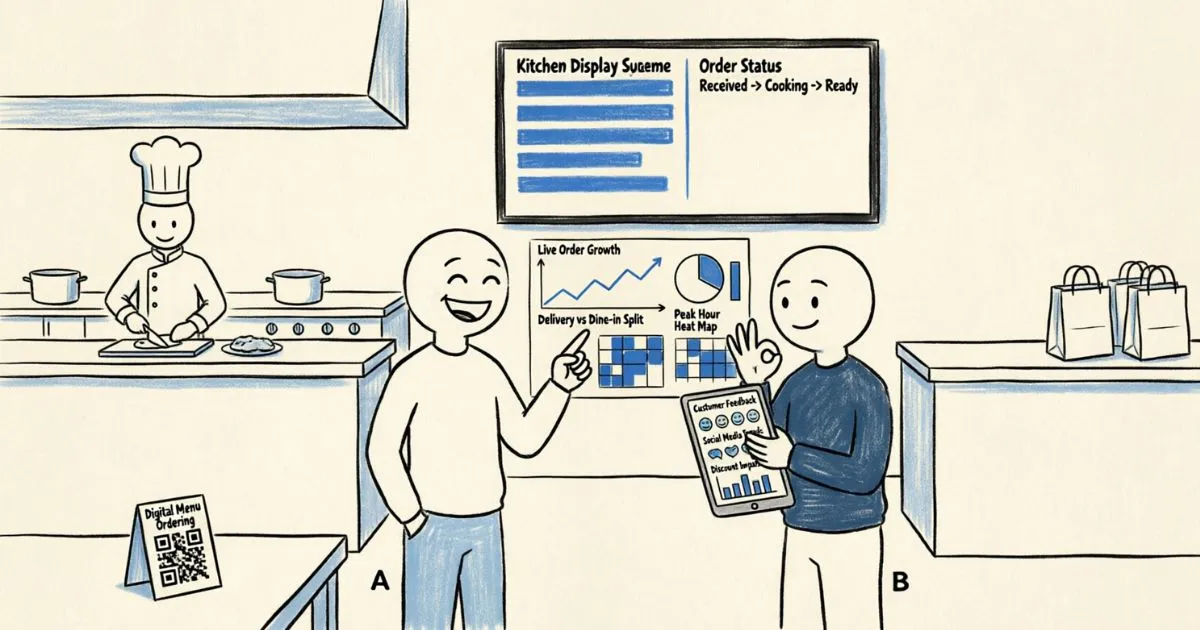
Restaurant marketing works best when it’s connected to business outcomes rather than vanity metrics. Track which channels are actually driving reservations and footfall — ask every new customer how they heard about you, use UTM parameters on digital links, monitor which Google Business Profile actions (calls, directions, website visits) correlate with busy periods. Review your marketing investment quarterly against these outcomes. The channels that are generating bookings deserve more budget. Those generating likes and follows without corresponding business impact deserve less. Disciplined measurement is what separates the restaurant owners who build effective marketing systems from those who spend money on activity without knowing whether it’s working.